


Canine nutrition has undergone a massive transformation from farm scraps and butcher offal to scientifically formulated complete meals. Pet parents often ask when was dog food invented as they reevaluate what fills their companion’s feeding bowl every day. In the mid-nineteenth century, working canines primarily relied on discarded table scraps, livestock trimmings, or forage to survive. Recognizing the inconvenience and nutritional inconsistency of that feeding style, early commercial pioneers stepped in to introduce shelf-stable, pre-measured biscuits. Taking a step back to examine this history reveals how everyday canine care developed alongside modern companion animal gear, including specialized leashes for dogs that pull during daily walks.
The arrival of commercial rations shifted domestic feeding habits across Europe and North America by offering predictable daily sustenance. Today, modern formulations emphasize specific nutrient profiles, digestible protein sources, and human-grade handling that go far beyond primitive dry biscuits. Understanding the timeline of commercial dog food allows pet owners to decode ingredient labels and select foods tailored to active lifestyles. By tracing the journey from nineteenth-century ship biscuits to modern cold-pressed clusters, owners can better navigate modern dietary choices for their household pets.
The Invention and Evolution of Commercial Dog Food
Commercial dog food originated in 1860 when an enterprising American electrician named James Spratt developed the first manufactured canine biscuit in London. Before that pivotal milestone, domesticated canines lived almost entirely on scraps, raw slaughterhouse waste, stale bread, or whatever food they could forage around farms and homesteads. The rapid expansion of industrialized manufacturing during the Victorian era established a new market for shelf-stable animal sustenance that transformed domestic pet care. Today, that nineteenth-century innovation has expanded into a complex nutrition science focused on whole foods, gentle processing, and balanced canine health.
The 1860 Origin: James Spratt and the First Commercial Biscuit
The concept of manufactured pet food emerged from an accidental observation along the docks of London. While traveling to sell lightning rods, James Spratt watched stray dogs scavenge leftover hardtack biscuits discarded by sailors returning from long sea voyages. These dry, durable sea biscuits were notorious for their rock-like texture, yet the dogs consumed them eagerly. Spratt recognized that urban dog owners lacked convenient, nutritious options for their animals, inspiring him to develop an engineered formulation specifically for canine consumption.
Spratt’s resulting creation was known as Spratt’s Patent Meat Fibrine Dog Cakes. The recipe blended wheat flour, beetroot, selected dried vegetables, and dried meat scraps often sourced from beef blood or dried gelatinous animal tissue. Spratt guarded the exact recipe carefully, marketing the baked cakes as a complete, scientific diet for sporting dogs. English country estates and sporting dog breeders embraced the cakes because they eliminated the daily hassle of sourcing raw butcher offal.
Following immediate success in Great Britain, Spratt expanded operations to the United States around 1870. The company established manufacturing in New York and launched aggressive advertising campaigns in sporting journals and at early conformation dog shows. American pet owners welcomed the convenience of packaged biscuits, creating an entirely new consumer goods segment. Competitors soon entered the market, setting the foundation for the modern commercial pet food industry.
The 1920s Canning Era and the Utilization of Surplus Meat
While baked dry biscuits remained the primary commercial option for over sixty years, wet dog food entered the market in 1922. The Chappel brothers of Rockford, Illinois, introduced Ken-L Ration, the world’s first commercially canned dog food. Following World War I, agricultural mechanization left the nation with a massive surplus of working horses, which the Chappel brothers processed into high-protein canned canine food. This marks the moment when meat-based wet food became widely accessible to everyday pet owners.
Ken-L Ration gained rapid popularity because it provided recognizable moisture and meat aroma that biscuits lacked. By the 1930s, canned rations commanded a dominant share of the American pet supply market. Advertisements highlighted the convenience of opening a metal tin rather than boiling livestock trimmings or dealing with raw butcher scraps at home. The canned format demonstrated that American households were willing to pay for shelf-stable food designed specifically for canine family members.
This prosperous era for canned rations faced an abrupt interruption with the outbreak of World War II. Wartime rationing strictly limited civilian access to tin, aluminum, and meat, forcing canned pet food manufacturers to halt production almost entirely. Dog owners had to return to dry meal formulations, dry biscuits, and household table scraps to feed their pets. This metal shortage inadvertently created the economic necessity for a shelf-stable dry food that could match the palatability of canned rations.
The 1950s Extrusion Breakthrough and Modern Kibble
The modern kibble familiar to pet owners today was invented in 1956 by the Ralston Purina Company. Prior to this milestone, dry food consisted primarily of loose, powdery baked meals or hard biscuits that required rehydration with water or milk. Purina adapted high-pressure steam extrusion technology, which had originally been developed for breakfast cereals like Chex, to cook and shape pet rations. This innovative manufacturing process transformed the pet food landscape within a few short years.
Extrusion cooking works by combining wet and dry ingredients into a thick slurry inside an industrial machine called an extruder. The mixture is subjected to high heat, mechanical friction, and immense steam pressure as it travels along a rotating screw. When the pressurized dough exits through a shaped die at the end of the machine, the sudden drop to atmospheric pressure causes trapped moisture to flash into steam, expanding the dough into light, puffed shapes. The dry pieces are then dried further in ovens and sprayed with liquefied animal fats and flavor enhancers to increase palatability.
Extrusion became the undisputed gold standard for mass-market pet food manufacturing almost overnight. The process thoroughly gelatinized starches, making grain ingredients significantly more digestible for canines while destroying harmful bacterial pathogens. Extruded kibble also offered unprecedented shelf stability, resistant to spoilage over months of storage at room temperature. The affordability, extended shelf life, and ease of feeding made extruded kibble the dominant choice for American households for subsequent decades.
Nutritional Standards, AAFCO Guidelines, and Life-Stage Science
During the early decades of commercial pet food production, recipes were created without a comprehensive scientific understanding of canine physiology. Consequently, dogs fed exclusively on early commercial formulas frequently suffered from nutritional deficiencies, including rickets from calcium imbalances and dull coats from essential fatty acid shortages. Veterinary researchers began examining canine metabolic requirements in the mid-twentieth century, highlighting the need for standardized nutritional profiles across all commercial brands.
The National Research Council published early canine nutrient recommendations, which later informed the Association of American Feed Control Officials, commonly known as AAFCO. Today, AAFCO sets nutritional adequacy standards that state feed regulators use to evaluate commercial pet foods. A commercial diet must meet specific minimum nutrient thresholds or pass formal feeding trials to claim it is complete and balanced. Keeping dogs physically active alongside proper nutrition often means outfitting them with suitable equipment, such as no-pull dog harness options that support safe daily exercise.
Modern nutritional science also established that dietary requirements fluctuate across different biological life stages. A rapidly growing puppy requires different calcium, phosphorus, and protein concentrations than a sedentary adult companion. Formulations began distinguishing between growth, reproduction, and adult maintenance to prevent orthopedic abnormalities in young dogs and organ strain in seniors. These nutritional profiles established the modern expectation that commercial dog food must provide complete, daily nutritional adequacy without requiring secondary supplements.
Modern Processing Innovations: From Extrusion to Cold-Pressed Clusters
Although traditional extrusion remains widely used, its intense heat and pressure can degrade delicate vitamins, natural antioxidants, and beneficial fatty acids. Modern pet owners have increasingly sought alternatives that preserve raw ingredient integrity while maintaining dry food convenience. In response, contemporary manufacturers have developed gentler production methods, such as cold-pressing, slow dehydration, and low-temperature roasting. These methods aim to deliver maximum nutrient density without subjecting ingredients to severe processing conditions.
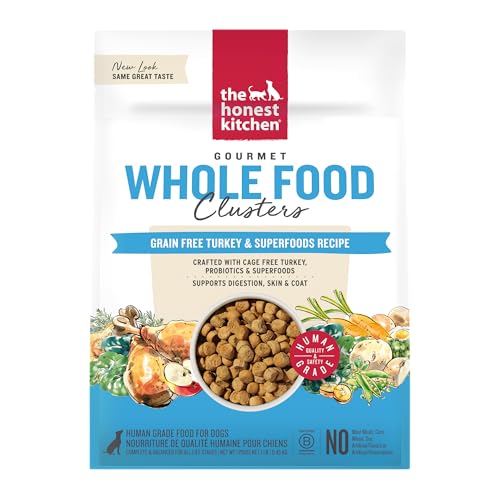
A prime example of this manufacturing evolution is seen in The Honest Kitchen Grain Free Turkey & Superfoods whole food clusters. Instead of utilizing traditional high-heat extrusion equipment, the brand employs their proprietary MadeHonest process. This approach takes real, whole-food ingredients, cold-presses them into bite-sized clusters, and gently roasts them to preserve natural aroma, taste, and micronutrients. The resulting clusters offer dense, recognizable nutrition without the puffed, overly processed texture of standard commercial kibble.
Gently roasted and cold-pressed clusters provide a distinctive feeding dynamic for pet owners. The low-temperature processing preserves the bioavailability of proteins and fats, allowing dogs to utilize dietary calories more effectively. Furthermore, whole-food clusters avoid the greasy surface fat sprays typically required to make extruded kibble appealing to dogs. The outcome is a naturally palatable, nutritionally dense dry food that honors the historical need for convenience while advancing ingredient quality.
Ingredient Evolution: From Mystery Meals to Whole Foods and Human Grade Standards
The historical trajectory of commercial dog food has seen a profound shift in ingredient sourcing and transparency. Throughout the mid-twentieth century, pet food labels routinely relied on generic animal by-products, rendered meat meals of unspecified origin, and heavy grain fillers. These ingredients provided adequate crude protein on a laboratory analysis sheet but offered variable digestibility for domestic dogs. Consumers possessed very little insight into the actual components used to manufacture their pets’ daily rations.
Today’s feeding standards prioritize identifiable, whole-food ingredients with transparent sourcing. High-quality dry foods feature named animal proteins, such as cage-free turkey, as their primary foundation rather than rendered meals. Complementary whole foods like pumpkin, apples, carrots, broccoli, kale, and chia seeds deliver natural dietary fiber and broad-spectrum antioxidants. These identifiable produce additions supply natural trace nutrients that support immune health, cell integrity, and vitality throughout all life stages.
Another modern milestone in pet food history is the establishment of legal human-grade manufacturing standards. The Honest Kitchen pioneered this category by adhering to human quality standards across every ingredient decision and production step. Unlike conventional feed-grade facilities that process rendered animal waste, human-grade facilities follow the same safety, cleanliness, and handling protocols as human food plants. This eliminates feed-grade by-products, ensuring dogs receive clean, whole-food nutrition formulated without genetically modified organisms, corn, wheat, or soy.
Digestive Support, Allergen Considerations, and Functional Formulations
As canine companion care has matured, pet parents and veterinarians have placed greater emphasis on gastrointestinal health and food sensitivities. Early biscuits and cereal-based foods offered limited options for dogs experiencing digestive upset or skin flare-ups. Modern formulations address these challenges by providing grain-free options that eliminate common triggers like corn, wheat, and soy. By utilizing alternative carbohydrate and fiber sources, modern recipes support stable digestion without sacrificing daily energy needs.
Functional additions play a substantial role in modern recipes to provide targeted wellness support. For instance, beneficial fats derived from flaxseed, coconut oil, and fish oil deliver essential fatty acids that promote a soft, shiny coat and healthy skin barrier. Maintaining a healthy coat also benefits from external care, such as pairing proper nutrition with coat-friendly dog collars that minimize friction. Concurrently, the inclusion of pumpkin, apples, and live probiotics actively supports balanced gut flora and firm stool consistency.
Modern cluster formulations also provide unique mealtime versatility that nineteenth-century biscuit makers could never have imagined. Sized appropriately for dogs across all life stages, recipes like The Honest Kitchen Grain Free Turkey & Superfoods can serve as a standalone complete daily meal. Alternatively, pet parents frequently utilize these nutrient-dense clusters as a flavorful topper on wet food or as wholesome training rewards throughout the day. This multi-purpose utility ensures owners can reward good behavior with clean, vet-crafted nutrition that complements regular meals.
Practical Takeaways for Modern Dog Owners
Understanding the history of commercial dog food empowers owners to make informed choices for their pets. When selecting a modern diet, evaluating the ingredient list remains the most effective way to gauge nutritional integrity. Look for named animal proteins as the leading ingredient, recognizable whole fruits and vegetables, and transparent processing methods that minimize thermal nutrient degradation. Ensuring the recipe includes vital heart-supporting amino acids like taurine provides added peace of mind for daily feeding.
From James Spratt’s first baked biscuits in 1860 to today’s cold-pressed whole-food clusters, commercial pet food has continually evolved to meet the changing expectations of pet parents. By prioritizing human-grade ingredients, functional digestive support, and responsible preparation methods, modern owners can provide their companions with food that supports long-term wellness. Exploring modern whole-food formulations allows every dog to enjoy the full benefits of over a century and a half of canine nutritional advancement.


Write Your Review
No reviews yet. Be the first to share your experience!