


A homemade senior-dog meal can be appropriate only when its full recipe supplies balanced nutrition for the dog’s needs. For anyone asking how to make dog food at home for senior dogs, the essential first step is to get a complete recipe reviewed for the individual dog rather than improvising ingredients. Age alone doesn’t determine the right calories, nutrients, or texture, and a meal that looks wholesome may still be deficient or excessive in important nutrients. A veterinarian can help identify health conditions or medication considerations that affect the plan.
Home cooking may appeal to owners who want to manage ingredients, accommodate preferences, or make feeding feel more manageable, but it also shifts responsibility for nutritional balance and safe handling to the person preparing the food. Senior dogs vary widely in activity, body condition, appetite, and chewing ability, so a recipe that suits one dog may not suit another. Start by collecting the dog’s current food label, weight history, feeding routine, and relevant health information for a professional discussion. For ingredient-specific context, see these guidelines about feeding tuna to dogs.


Pros
- Triple-source animal protein supports tissue repair and muscle maintenance without excessive fat
- Controlled calorie density helps prevent unwanted weight gain in slower-paced or aging dogs
- Easily digestible whole grains promote consistent gut health and firm, manageable stools
- Convenient small bag size prevents kibble from oxidizing before smaller dogs can finish it
Cons
- 5-pound package size requires frequent reordering for medium breeds or multi-dog households
- Contains wholesome grains, making it unsuitable for pets requiring a strict grain-free diet
- May not meet the higher energy demands of working dogs or highly athletic adult pets
Fromm Reduced Activity Senior Gold Premium Dog Food is a specially crafted dry kibble designed to meet the evolving nutritional needs of aging companions and lower-activity adult canines. Formulated by a long-standing, family-owned pet food producer based in Wisconsin, this recipe focuses on sustaining vitality while taking a gentler approach to caloric density. For pet parents caring for graying muzzles, couch-loving rescue dogs, or pets recovering from reduced mobility, this recipe offers a thoughtful balance between rich animal protein and measured energy.
The foundation of this dry food centers on a diverse animal protein blend including chicken, duck, and lamb. Sourcing protein from multiple quality meats provides a broad spectrum of essential amino acids that support tissue repair, hormone balance, and lean muscle retention. Older dogs naturally experience a decrease in muscle mass, so providing digestible, high-quality protein without loading the bowl with empty fat or filler ingredients helps keep them agile and strong during their golden years.
Digestive comfort is another major priority for senior and sedentary pets, and the whole grain profile in this kibble supports healthy gut transit. The mix of whole grains supplies complex carbohydrates for steady, non-spiking energy alongside insoluble and soluble fibers that aid in regular digestion. Pet parents managing sensitive stomachs or looking for tidy, firm stool cleanup will appreciate the easily digestible nature of this balanced recipe.
Daily feeding practicality is enhanced by the moderate kibble size, which is comfortably suited for the dental limits of small and medium breeds. Mature dogs with dental sensitivities or worn teeth can break down these kibble pieces without struggling, whether served dry or mixed with warm water to release natural aromas. The 5-pound bag is particularly convenient for single-dog homes, small apartments, or anyone rotating fresh bags to ensure peak aroma and crunchy texture.
While this recipe excels for older or less active canines, it is not formulated for high-energy working dogs, pregnant females, or growing puppies requiring rapid growth caloric surplus. Additionally, owners who prefer strictly grain-free options will need an alternative menu. For senior dog caregivers and owners of mellow adult companions seeking proven Midwestern craft nutrition, Fromm Senior Gold offers dependable quality that respects the changing rhythm of your dog's life.
As dogs age, their metabolic rate slows down and joint stiffness can lead to shorter daily walks. Feeding standard adult food during this stage often leads to steady weight gain, which places extra strain on aging hips and knees. Fromm Reduced Activity Senior Gold addresses this issue by reducing overall calorie density while maintaining substantial protein levels to keep muscles robust.
The kibble texture and size are also optimized for easier chewing, which reduces oral fatigue in older dogs who may have missing teeth or minor gum sensitivity. Integrating this formula into your senior companion's daily routine can help maintain an ideal body condition score, giving them the physical comfort needed to enjoy their daily routines.
The combination of chicken, duck, and lamb delivers an appealing natural flavor that entices picky eaters while offering comprehensive amino acid support. These proteins work alongside balanced vitamins and minerals to bolster immune defense and cellular repair across the entire body.
In addition, the whole grain carbohydrate blend provides sustained energy release without causing rapid blood sugar fluctuations. The dietary fiber works to support a healthy gut microbiome, contributing to regular nutrient absorption and consistent digestive health throughout your dog's adult and senior years.
Pros
- Saves significant time and effort compared to preparing homemade boiled beef and rice from scratch
- Electrolyte boost supports hydration when sick dogs struggle to retain fluids
- Long three-year shelf life makes it ideal for pet first-aid kits and travel bags
- Gentle, human-grade ingredients provide high palatability for nauseous or picky dogs
Cons
- A 6-ounce pouch provides limited servings for large and giant breed dogs
- Costs more per serving than buying bulk grocery store rice and lean meat
- Designed only for temporary supplemental feeding rather than long-term complete daily nutrition
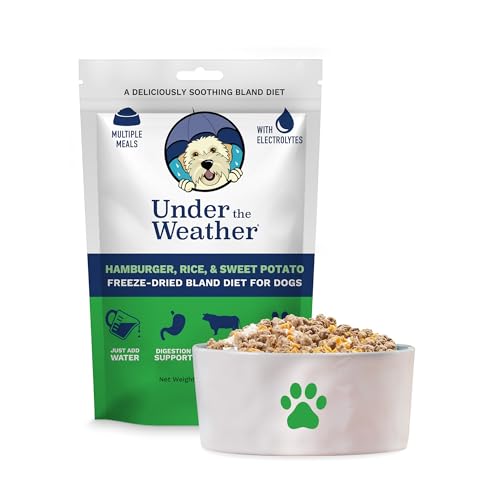
Under the Weather Freeze-Dried Bland Diet is an emergency meal designed to support canines experiencing temporary gastrointestinal distress such as vomiting or loose stool. Rather than spending hours boiling white rice and lean ground meat in the kitchen, pet parents can keep this shelf-stable solution ready in the pantry. It is particularly well suited for new puppy parents dealing with sudden dietary indiscretions, senior dog owners managing delicate digestions, and traveling pet lovers who need portable nutrition on road trips or camping excursions.
When a dog suffers from acute stomach upset, rapid fluid loss and reduced appetite pose significant concerns. This freeze-dried formula incorporates an electrolyte blend alongside easy-to-digest white rice, hamburger, and sweet potato to replenish essential minerals while stabilizing stool consistency. The gentle aroma and natural meat flavor help coax finicky, nauseous dogs to eat without aggravating inflamed intestinal walls. It also functions smoothly as a transition topper when reintroducing standard kibble after illness.
Ingredient integrity is critical for sick pets, and this formula uses 100 percent human-grade ingredients sourced and manufactured in the USA. The recipe is free of artificial dyes, artificial flavors, meat by-products, and gluten, reducing potential allergen triggers. The freeze-drying process preserves nutritional density while allowing an impressive three-year shelf life. Stored in a lightweight, durable pouch, it safely resists pantry pests and moisture until ready for hydration.
Preparation takes only minutes with no cooking skills required. Owners simply measure the recommended portion into a dog bowl, add boiling water, stir, and allow the mixture to cool before serving. However, pet parents should recognize realistic limitations. The 6-ounce pouch is relatively small, meaning owners of large or giant breeds will go through a bag in just a few feedings. Additionally, this blend is intended strictly for intermittent or supplemental feeding during digestive episodes, not as an everyday balanced diet.
For pet parents who want immediate peace of mind without late-night kitchen prep, Under the Weather Bland Diet serves as a practical, vet-formulated first-aid staple. It eliminates guesswork during stressful bouts of sickness, delivering gentle stomach relief and critical hydration right when dogs need it most.
Digestive upset is one of the most frequent reasons for unexpected vet visits, often triggered by stress, dietary indiscretions, medication side effects, or travel anxiety. A traditional bland diet provides low-fat protein and easily absorbed carbohydrates that allow the digestive tract to rest. This formula elevates the classic home-cooked remedy by infusing targeted electrolytes that help combat dehydration caused by diarrhea and vomiting.
Because the recipe features wholesome sweet potato and pure white rice, it supplies soluble fiber that supports healthy stool formation without irritating sensitive gut flora. Using this pre-portioned formula ensures consistent nutritional quality and helps keep recovering dogs comfortable and hydrated through routine disruptions.

Planning balanced homemade meals for a senior dog
Use a recipe designed to be complete and balanced for the dog’s life stage, with quantities and preparation instructions specified for that recipe. Don’t treat a list of appealing ingredients as a nutritional plan: meat, grains, vegetables, and oils do not automatically provide the right nutrient profile when combined at home. A senior dog’s age is relevant, but the dog’s health, weight trend, activity, and eating ability also matter. Establish those details before changing the diet, and ask a veterinarian how any known condition may affect the plan.
Gather these details before discussing a homemade diet with a professional:
- Your dog’s current weight, recent weight changes, and usual activity.
- The current food label, daily portion, treats, toppers, and supplements.
- Known diagnoses, medications, allergies, and previous food reactions.
- Changes in appetite, stool, chewing, drinking, or meal completion.
- The cooking and storage routine you can follow consistently.
Why a complete recipe matters more than a short ingredient list
A recipe can contain recognizable ingredients and still fail to provide adequate amounts of essential nutrients. Nutritional adequacy depends on the whole formulation, including the amounts of ingredients and any specified supplements, rather than the appearance of individual foods. Leaving out a listed component or substituting an ingredient can change the balance. Follow the exact recipe and seek guidance before making changes, especially if the dog has a medical condition.
Commercial food labels provide useful context, but they don’t validate a homemade recipe. For example, the supplied product information describes Fromm Reduced Activity Senior Gold as formulated to meet AAFCO Dog Food Nutrient Profiles for maintenance. That specific statement applies to that food, not to a home-cooked mixture or other diets. If using a commercial food alongside home-prepared food, ask whether the combination remains appropriate and how much of each belongs in the daily plan.
How senior health changes the conversation
Older dogs aren’t all alike: some remain active and maintain their weight, while others move less, eat inconsistently, or have health needs that affect feeding. A single age-based assumption can miss these differences. Share changes in thirst, appetite, body condition, mobility, or digestion with the dog’s veterinarian rather than trying to solve them by changing ingredients alone. A medical diet or treatment plan should not be replaced with homemade food without professional direction.
Chewing difficulty also deserves attention. Softer food may be easier for some dogs to eat, but texture changes do not correct dental pain or explain a sudden refusal to eat. Ask whether an examination is needed when chewing, swallowing, or appetite changes. Don’t assume that a softer meal is nutritionally complete simply because it is easier to consume.
Setting calories and portions without guessing
Portion size should be based on the complete recipe’s feeding guidance and the dog’s individual needs, not on a generic serving estimate. Homemade meals can vary in energy density, so equal-looking portions may not provide equal calories. Weigh ingredients as directed by the recipe, and use the specified preparation state, such as cooked or uncooked, because changing that basis can alter the result. Ask for an individualized portion recommendation when weight management or a health condition is involved.
Track the dog’s weight and body condition as part of the plan, then discuss meaningful changes with the veterinarian. Don’t make repeated calorie cuts based only on a rough visual estimate, since too little food can also create nutritional problems. Count treats, chews, and extras when considering the full daily intake. A feeding plan should make clear whether those extras are permitted and how they affect the meal allowance.
Choosing ingredients only within the written recipe
Ingredient choice should follow the recipe rather than a broad rule that one meat, grain, or vegetable is best for every senior dog. A limited list may be useful for a particular plan, but it doesn’t establish that the food is balanced or appropriate for an individual. Likewise, removing grains or adding a favored ingredient isn’t a substitute for assessing the complete diet. If a suspected food reaction is part of the reason for cooking at home, discuss a controlled plan instead of making several changes at once.

Owners may be tempted to add foods because they are commonly considered nutritious for people. Dogs have different dietary requirements, and an ingredient’s reputation doesn’t show that it belongs in a specific recipe. Do not add oils, bones, supplements, or table scraps unless the written plan permits them. For a related example of evaluating a single ingredient rather than assuming it is suitable, the dog food safety discussion about unusual foods illustrates why the specific food and context matter.
Safe preparation and consistent kitchen handling
Prepare the food in a clean workspace and use safe food-handling practices for the ingredients involved. Keep raw ingredients separate from ready-to-eat foods, wash hands and food-contact surfaces, and follow appropriate cooking and storage guidance. These steps reduce avoidable contamination risks, but they don’t make an incomplete recipe nutritionally adequate. Raw feeding carries pathogen risks, so don’t assume that a raw or lightly prepared approach is safer or more suitable for an older dog.
Batch cooking can make a routine easier, but only if the recipe, portioning, and storage instructions are followed consistently. Divide prepared food into portions using the method specified for the recipe, label containers clearly, and refrigerate or freeze it according to safe guidance. Don’t leave perishable food sitting out for extended periods, and discard food that appears spoiled or has been stored improperly. If storage instructions are unclear, ask the recipe source or a professional before preparing a large batch.
Use this practical check before preparing a batch:
- Confirm every ingredient and amount against the complete recipe.
- Check that any required supplement is included as specified.
- Use clean equipment and separate raw ingredients from prepared food.
- Follow the recipe’s cooking method instead of substituting a shortcut.
- Portion and store the finished food using safe handling guidance.
- Keep the dog’s current diet available during any planned transition.
Introducing a new diet and watching for changes
A diet change can upset digestion, so ask how quickly to transition and follow the plan provided. A gradual transition may be appropriate, but the pace depends on the dog’s situation and any clinical instructions. Don’t change several foods, treats, and supplements at once if you need to identify what is associated with a reaction. Keep notes on meals and symptoms so you can describe the timing and pattern accurately.
Monitor appetite, stool consistency, vomiting, energy, and willingness to eat after the change. A mild variation may have several explanations, so don’t assume that a particular ingredient is the cause. Persistent or severe symptoms, refusal to eat, or sudden deterioration warrant prompt veterinary advice. Dogs with existing medical conditions need a more cautious transition guided by their care team.
Why toppers and temporary bland meals are not full diets
A topper, treat, or short-term bland meal should not be mistaken for a complete daily diet. Product information for Under the Weather Bland Diet describes a freeze-dried food intended for digestive upset and says it can be used as a topper during a return to regular food. That description doesn’t establish that it is suitable as a long-term, complete diet for a senior dog. Ask the dog’s veterinarian how to handle an illness-related feeding change and when to return to the usual plan.
Likewise, a food marketed for senior maintenance is not automatically the right choice for every older dog. The supplied information for Royal Canin Size Health Nutrition Medium Aging 10+ identifies it for medium senior dogs aged 10 and older within a stated weight range. That label detail is specific to the product, not a universal rule for senior dogs. Compare the dog’s age, size, health needs, and the food’s nutritional statement rather than relying on the word “senior” alone.
Keeping the routine practical over time
Home preparation requires repeatable shopping, measuring, cooking, and storage habits. Consider whether you can obtain the ingredients regularly and follow the recipe even when household schedules change. A plan that is difficult to maintain can lead to substitutions or missed components, so discuss practical obstacles before relying on it. If the routine stops being manageable, ask about other feeding approaches that meet the dog’s needs.
Review the plan when the dog’s health, weight, appetite, or activity changes, rather than assuming one recipe remains suitable indefinitely. Keep the recipe version and any professional instructions together so everyone feeding the dog can follow the same quantities. Make sure family members understand which extras are allowed and how meals are stored. Consistency makes it easier to spot a change that deserves attention.
Before committing to home cooking, have the complete recipe and the dog’s health details reviewed, then clarify portions, supplements, transition pace, and storage. If any part of the plan is uncertain, pause substitutions and get guidance before serving it as the dog’s regular diet.


Write Your Review
No reviews yet. Be the first to share your experience!