


A homemade grain-free meal can be prepared, but it should not become your dog’s regular complete diet unless its nutrient balance has been properly formulated. If you’re asking how to make grain free dog food at home, start by treating grain exclusion and nutritional adequacy as separate questions. A meal can avoid grains and still lack nutrients dogs need, so familiar ingredients alone aren’t proof that it is balanced. For a safer starting point, review the food’s nutritional adequacy statement and discuss a home-prepared plan with a qualified professional who can address your dog’s needs.
Home cooking may appeal when you’re trying to manage an ingredient concern, offer a different texture, or understand exactly what goes into a meal. But removing grains does not automatically address a suspected allergy, and changing several ingredients at once can make it harder to identify what affects your dog. A grain-free commercial food and a homemade recipe also aren’t interchangeable: the former may be formulated as a complete diet, while the latter needs deliberate nutrient planning. Our guide to safe tuna feeding explains why a single food ingredient should not be mistaken for a complete meal.

Pros
- Made with 100% human-grade ingredients and cage-free chicken as the first ingredient
- Nutrient preservation through cold-pressing and gentle roasting rather than heavy extrusion
- Enriched with live probiotics, fiber from pumpkin, and essential omega fatty acids
- Dual-purpose design works equally well as a dry meal, meal mixer, or training reward
- Clean recipe containing zero feed-grade by-products, meat meals, or fillers
Cons
- Small 1 lb bag contains only about two full meals for a medium-sized dog, requiring frequent reorders if used as a primary diet
- Higher cost per ounce compared to standard extruded commercial kibble brands
The Honest Kitchen Grain Free Chicken and Superfoods Whole Food Clusters offer a human-grade dry dog food crafted as a wholesome alternative to conventional extruded kibble. Prepared through a cold-pressing and slow-roasting method, these bite-sized clusters provide complete nutrition for dogs across all life stages. This 1 lb trial pouch is particularly well suited for new puppy parents looking for high-value training rewards, small breed owners who need compact meal portions, and caregivers managing picky eaters or dogs with sensitive stomachs.
In everyday feeding routines, the ingredient quality directly impacts physical wellness, digestive comfort, and mealtime excitement. The recipe spotlights real cage-free chicken backed by beneficial whole foods like pumpkin, apples, and chia seeds. Beneficial fatty acids from coconut oil, flaxseed, and fish oil help support skin moisture and coat luster, which can be especially helpful for dogs prone to dry or itchy skin. The addition of live probiotics and natural prebiotic fiber aids in smoother digestion, helping pet parents manage firm stools and consistent tummy comfort.
The primary distinction of this dry dog food lies in its manufacturing integrity and clean ingredient sourcing. Unlike conventional kibbles that often rely on feed-grade meat meals, mystery by-products, or heavy starch fillers like corn, wheat, and soy, these clusters adhere strictly to human-quality production standards. The cold-pressed and roasted technique locks in natural savory aromas and vitamins that high-heat processing can degrade. Every batch includes essential taurine to promote long-term cardiovascular health, ensuring that dogs receive clean, balanced vitality in every bite.
From an everyday handling perspective, the dry texture makes these clusters exceptionally easy to serve and store without sticky residue. Owners can use them as a standalone daily diet, sprinkle them over wet food or raw meals as an enticing topper, or slip a handful into a training pouch during leash walks and obedience drills. The crunchy texture provides engaging chewing satisfaction while remaining easy for smaller mouths to break down. Storing the bag in a cool, dry pantry preserves freshness without requiring refrigeration.
While the ingredient profile is exceptional, the 1 lb trial size presents realistic limits for multi-dog or large breed households. At roughly two servings for a 30 lb dog, this specific pouch will disappear quickly if utilized as an exclusive daily meal for golden retrievers, labs, or other large breeds. For larger dogs, this bag is best treated as a sample taste-test or a clean training treat. Overall, this trial size is an outstanding, low-risk purchase for owners who prioritize clean nutrition, want to coax picky pups at the bowl, or desire a premium human-grade reward for positive reinforcement training.
Formulated to support whole-body vitality, this grain-free recipe combines lean animal protein with functional superfoods. Cage-free chicken serves as a lean amino acid source that supports lean muscle maintenance in energetic pups and aging seniors alike. The inclusion of taurine supports heart muscle function, while vibrant produce like kale and broccoli supplies essential dietary antioxidants that reinforce daily immune defense.
Digestive wellness and dermal nourishment are core priorities within the formula. Added pumpkin provides gentle soluble fiber that regulates gastrointestinal transit, paired with active probiotics to cultivate balanced gut flora. Working from the inside out, healthy fats from fish oil and flaxseed supply omega-3 and omega-6 fatty acids that nourish the skin barrier and maintain a glossy, flake-free coat.
Beyond functioning as a daily meal, the small, crunchy clusters serve as highly effective training treats. Because the food is made with genuine roasted poultry and whole produce, it carries a rich natural aroma that holds a dog's focus during recall exercises, leash walking, or crate training. The bite-sized pieces can be fed repeatedly throughout a training session without overloading a puppy or small dog with empty calories or artificial additives.
Unlike soft, greasy treats that leave oily residues on hands or inside treat pouches, these dry clusters remain mess-free and easy to dispense on the go. Pet parents working on puppy socialization, apartment manners, or basic obedience can easily portion out rewards while keeping daily caloric intake balanced and nutritious.
Pros
- 100% human-grade ingredients with cage-free chicken as the primary protein source
- Fast 3-minute warm water preparation creates an enticing, homemade-style stew
- Gentle on sensitive stomachs while encouraging essential daily hydration
- Compact, lightweight box is easy to store in apartments and pack for road trips
- Formulated for all life stages, from growing puppies to adult dogs
Cons
- Requires access to warm water and a short waiting period before serving
- The soft, oatmeal-style texture may require an adjustment period for dogs used to dry kibble
- Leftovers must be refrigerated and consumed within a couple of days once mixed with water
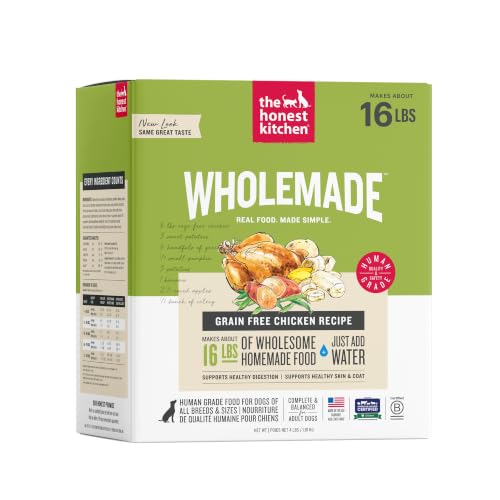
The Honest Kitchen Wholemade Grain Free Chicken Recipe is a human-grade dehydrated dog food crafted to deliver the nutritional integrity of fresh home cooking in a shelf-stable box. Formulated around cage-free chicken as the primary protein source, this recipe combines recognizable produce like sweet potatoes, pumpkin, apples, and green beans without relying on meat meals or feed-grade by-products. The gentle dehydration process removes water while preserving natural vitamins, minerals, and flavor, creating an aromatic meal that quickly rehydrates into a warm, savory stew.
This recipe is particularly well suited for pet parents dealing with picky eaters, food sensitivities, or irregular digestion. The clean ingredient panel makes it an appealing option for multi-dog households, new puppy parents seeking balanced growth nutrition, and senior dog caregivers looking for an easy-to-chew meal. Additionally, outdoor adventure dog owners and apartment dwellers will appreciate how little space the lightweight box occupies compared to heavy cans or bulky bags of standard kibble.
From a functional wellness standpoint, this dehydrated food provides noticeable everyday benefits. Adding warm water to the mix naturally increases your dog's daily fluid intake, which supports optimal kidney function and urinary health. The blend of dietary fiber from pumpkin and garden vegetables aids smooth digestive transit and helps firm up loose stools. At the same time, essential fatty acids derived from flaxseed work from within to nourish the skin barrier and promote a sleek, glossy coat.
Daily preparation is quick and mess-free. Pet owners simply scoop the desired portion, stir in warm water, wait three minutes for the food to fully rehydrate, and serve. A single four-pound box yields approximately sixteen pounds of ready-to-eat food, offering exceptional space efficiency in pantries, campers, or travel bags. While routine clean-up is straightforward, feeding bowls should be rinsed promptly after mealtime to prevent any remaining food from sticking as it dries.
A few practical factors are worth keeping in mind during initial feedings. Dogs accustomed solely to crunchy kibble may find the soft, porridge-like texture unfamiliar at first, so introducing it gradually or using it as a meal mixer can ease the transition. Pet parents also need to factor in the few minutes of prep time compared to instant kibble scooping. For dog owners seeking clean, digestible, human-grade nutrition in a compact format, this dehydrated chicken formula is a practical, top-tier feeding solution.
This formula is crafted with whole foods designed to support whole-body canine wellness from the inside out. Real cage-free chicken supplies lean protein for muscle maintenance, while nutrient-rich produce provides natural antioxidants to help maintain immune vitality across all life stages.
Digestive comfort is a key highlight of this recipe. The inclusion of pumpkin, sweet potatoes, and green beans supplies gentle soluble and insoluble fiber that helps soothe sensitive stomachs and regulate bowel habits. Furthermore, flaxseed provides essential omega fatty acids that combat dry, flaky skin and encourage a vibrant, healthy coat.
Preparing this dehydrated dog food takes minimal effort and only three minutes of rehydration time. Simply mix one part dry food with warm water according to the feeding guidelines, stir thoroughly, and allow the ingredients to absorb the moisture before serving at a comfortable temperature.
The compact nature of a four-pound box making sixteen pounds of fresh food makes it an outstanding solution for road trips, camping, and travel. Pet parents can carry days of fresh, human-grade meals without taking up cooler space or lugging heavy canned goods.


Pros
- Real salmon as the first ingredient provides quality animal protein for muscle maintenance
- Grain-free recipe avoids common fillers like corn, wheat, and soy
- Nutrient-dense sweet potato and pumpkin support regular digestive health
- Versatile all-life-stages formula works from puppyhood to senior years
- Convenient small bag size is easy to store and great for trial transitions
Cons
- The 4-pound bag runs out fast in multi-dog or large breed households
- Noticeable fish aroma may not appeal to all pet parents during meal prep
- Grain-free diet options should be evaluated with your veterinarian based on your dog's specific dietary needs
Nature's Recipe Grain Free Salmon Dry Dog Food is a nutrient-focused kibble crafted to provide balanced daily nutrition without common grain fillers. With real salmon serving as the first ingredient, this recipe delivers protein to support muscle health while relying on sweet potatoes and pumpkin for carbohydrate-derived energy. It offers a practical nutritional foundation for daily meal routines across dogs of diverse sizes and ages.
This recipe is particularly well suited for pet parents dealing with suspected food sensitivities to corn or wheat, as well as multi-dog households that need an all-life-stages formula capable of supporting both growing puppies and mature seniors. Apartment dwellers and small breed owners will appreciate the compact 4-pound packaging, which stores neatly in tight pantries and keeps kibble fresh without taking up floor space.
In everyday feeding routines, a fish-forward formulation provides natural omega fatty acids that contribute to a shinier coat and hydrated skin. The combination of sweet potatoes and pumpkin offers easily digestible carbohydrates that help maintain steady energy without causing stomach upset. Pet owners seeking clean labels will note the deliberate omission of beef, artificial flavorings, and chemical colorants.
Managing mealtimes with dry kibble is straightforward, fitting effortlessly into standard measuring cups, puzzle feeders, or slow feeder bowls. The 4-pound bag size allows pet parents to introduce a new salmon recipe gradually over seven to ten days without leaving a huge open bag exposed to air and oxidation. Resealing the bag tightly or transferring kibble into an airtight pet food container helps preserve crunch and aroma.
A clear limitation of this specific size is that high-energy large breed dogs will empty a 4-pound bag within a week, making larger bag options more economical for big dogs. Additionally, the distinct salmon smell might be noticeable in smaller apartment kitchens. However, for dog owners seeking a dependable, grain-free salmon formula to test with a picky eater or a sensitive pup, this bag provides a high-value, accessible starting point.
Real salmon delivers high-quality protein to support lean muscle maintenance and essential amino acid profiles across all life stages.
The natural presence of omega fatty acids in fish-based recipes supports healthy skin barriers and lustrous coats, helping minimize dryness and flaking.
Sweet potatoes and pumpkin offer gentle dietary fiber sources that aid nutrient absorption, supporting firmer stools and balanced gut motility.

Pros
- Real chicken leads the ingredient profile to provide quality protein for adult lean muscle support.
- Excludes common formulation additives such as poultry by-product meals, artificial colors, and artificial preservatives.
- Incorporates fiber-rich sweet potatoes and pumpkin to aid digestive regularity.
- Substantial 24 lb bag provides a dependable, economical supply for standard daily feeding routines.
Cons
- Positioned strictly for adult dogs and not formulated for growing puppies or senior-specific requirements.
- The 24 lb bag does not feature a built-in zip closure, requiring an external container to maintain freshness.
- Specific guaranteed analysis percentages and calorie densities are not provided on the immediate retail listing.
Nature's Recipe Grain Free Chicken, Sweet Potato & Pumpkin Recipe is a dry kibble formulated for adult dogs. Built around real chicken and digestible carbohydrate alternatives, this dry dog food addresses the needs of owners seeking a grain-free maintenance diet. The formula eliminates common commercial fillers, making it a viable option for adult dogs of various breed sizes that do well on poultry-forward, non-grain nutrition.
From a nutritional standpoint, real chicken serves as the number one ingredient, supplying the primary animal protein required to support healthy muscle tone and everyday energy in adult dogs. In place of traditional grains like corn, wheat, or soy, the recipe integrates sweet potatoes and pumpkin, which contribute natural dietary fiber to support gastrointestinal tract function. Added calcium and copper assist in maintaining strong bones, while supplemental vitamins and minerals round out daily nutrient intake. The formula also excludes poultry by-product meals and artificial flavors, colors, or preservatives.
The product format is standard dry kibble packed in a 24-pound bag measuring 15.5 by 23 by 4.38 inches. This format simplifies daily meal prep, allowing pet owners to easily measure dry portions with standard measuring scoops. Because detailed guaranteed analysis metrics such as exact crude protein, fat, and caloric content are not detailed in the raw product summary, owners should consult the physical label on the bag to calculate daily caloric intake and balance feeding amounts against their dog's body condition and activity level.
Daily feeding routines with this kibble should incorporate a standard transition period when switching from another diet. Introducing the new food gradually over seven to ten days by mixing increasing ratios of Nature's Recipe with the previous kibble helps prevent minor digestive upset. To preserve kibble texture, aroma, and nutrient integrity after opening the large 24-pound package, storing the food in an airtight plastic or metal container in a cool, dry indoor spot is recommended.
While this recipe offers several ingredient strengths, practical limitations exist. It is designated for adult dog maintenance, meaning it should not be fed to growing puppies or pregnant dogs with higher nutrient and mineral requirements. Furthermore, while grain-free diets appeal to many pet parents, grain avoidance is not medically required for all dogs, and chicken remains a recognized dietary allergen for certain sensitive canines. Dogs with chronic digestive symptoms or suspected food allergies should receive professional veterinary evaluation rather than relying on over-the-counter diet changes.
Nature's Recipe Grain Free Chicken Dry Dog Food provides dependable value for owners seeking an accessible, poultry-based dry food without grain ingredients. By combining real chicken with wholesome fiber sources like pumpkin and sweet potato, it delivers a clean, balanced adult feeding solution that balances ingredient quality with everyday household affordability.
This recipe features real chicken as the primary ingredient to supply bioavailable animal protein for lean muscle maintenance. It is formulated completely grain-free, avoiding corn, wheat, and soy entirely.
Carbohydrates and dietary fiber are supplied via sweet potatoes and pumpkin to encourage healthy, consistent digestion. The formula is fortified with essential vitamins and minerals, including calcium and copper for bone support, and contains zero poultry by-product meal or artificial additives.
The 24-pound bag format offers a cost-effective bulk option suited for medium and large dogs or multi-dog households. The physical package dimensions are 15.5 x 23 x 4.38 inches.
Because the original bag lacks an integrated resealable zip track, keeping the bag inside a sealed, airtight pet food container helps protect the kibble from humidity, pests, and lipid oxidation, ensuring long-lasting crunch and palatability.

How to approach homemade grain-free dog food safely
Making a grain-free meal at home is a two-part task: select ingredients that exclude grains, then ensure the finished diet supplies the nutrients and energy your dog needs. The second part is not reliably solved by adding a variety of meat and vegetables. A recipe must account for the whole formulation, the dog’s life stage, and the quantities actually fed. Without a complete recipe designed for your dog, use homemade food only in a role that does not displace a balanced diet.
Grain-free describes an ingredient pattern, not a nutritional standard or a health benefit by itself. Rice, wheat, corn, oats, barley, and other grains may be absent, but their removal does not show that a meal is appropriate for every dog. Some dogs need a specific diet for a medical concern, and a household recipe may not meet that purpose. If a health issue or suspected food reaction prompted the change, get individualized guidance before altering the regular food.
- Identify the reason for avoiding grains before selecting ingredients.
- Check whether the recipe is intended as a complete diet or a supplemental food.
- Confirm the formulation is suitable for your dog’s life stage.
- Use ingredient amounts and preparation directions from a complete, professionally formulated recipe.
- Track what your dog eats, including treats, toppers, and supplements.
- Ask for advice before making a therapeutic diet change.
Grain-free ingredients do not guarantee nutritional balance
A dog needs more than protein and calories from a meal. The complete diet must provide appropriate amounts of essential nutrients, including vitamins, minerals, fats, and amino acids, in proportions suitable for the dog. The details depend on the entire recipe, not on whether any single ingredient sounds wholesome. A dish made from meat, vegetables, and a starch-free carbohydrate source may still be deficient or imbalanced.
Ingredient variety can create a misleading sense of completeness. Adding a leafy vegetable or an organ meat does not establish that the overall recipe has enough of every nutrient, while adding a supplement without a formulated plan can create excesses or unwanted interactions. Ingredient lists also do not show the quantities in the finished meal. That is why a recipe’s formulation and feeding directions matter more than the number of ingredients or how recognizable they seem.
Look for clear guidance on whether the food is complete and balanced for a stated life stage. A commercial food’s adequacy statement can help distinguish a complete meal from a topper or treat, but it does not validate a separate recipe prepared at home. For a homemade diet, ask who formulated the recipe, what dog it is intended for, and whether its instructions include all required ingredients and supplements. If those details are missing, don’t assume that a general online recipe is suitable as a daily diet.
Build the recipe around your dog’s circumstances
Life stage is a central part of diet planning. A growing puppy has different nutritional needs from an adult dog, and a recipe that appears suitable for one stage should not be presumed appropriate for another. Older dogs may also have individual health needs, but age alone does not identify the right nutrient profile. Share your dog’s age, current food, body condition, activity, and health history when getting a recipe assessed.
Body size and daily energy needs affect portion planning, too. A recipe can be nutritionally complete yet provide too many or too few calories when fed in the wrong amount. Do not take a serving size from another dog or copy a generic online quantity as an individualized prescription. Follow the directions supplied with the formulated recipe, monitor your dog’s condition, and ask for adjustments if weight or appetite changes.
Food sensitivity concerns need a focused plan rather than a broad ingredient purge. If you suspect a reaction, changing the main food while continuing to offer flavored treats, chews, table scraps, or toppers can undermine the effort to identify a trigger. A grain-free label does not establish that a food excludes the ingredient causing a reaction. Discuss the symptoms and feeding history with a qualified professional before beginning an elimination diet or making a long-term restriction.
Use these checks to clarify what a suitable recipe must address before you cook.
- Write down your dog’s life stage and any health conditions or dietary restrictions.
- Record all foods, treats, chews, supplements, and toppers currently given.
- Confirm the recipe is designed for the dog and life stage in question.
- Check whether every ingredient and supplement has an exact measurement.
- Ask how the recipe’s completeness and calorie guidance were established.
- Keep the recipe instructions available so substitutions can be checked first.
Choose ingredients and follow one complete recipe
Once a complete recipe has been selected for your dog, use its specified ingredients rather than assembling a meal from a general list of foods dogs may eat. The recipe’s ingredients work together as a formulation, so swapping one meat for another or replacing a supplement can change its nutritional profile. Even a substitution that seems similar in the kitchen may not be equivalent in the diet. Check with the person who formulated the recipe before making changes.
Measure each ingredient as directed and keep the prescribed quantities consistent. Household estimates, such as a handful or a spoonful, can vary from one preparation to another and make it harder to follow the formulation. Do not omit an ingredient because your dog appears to prefer the meal without it. If an ingredient is unavailable or your dog will not eat it, pause and ask whether an approved substitution exists.
Preparation matters because cooking can affect moisture, yield, and the finished amount of food. Follow the recipe’s stated preparation method rather than assuming that raw, boiled, baked, or pan-cooked ingredients can be exchanged freely. Avoid adding seasoning, sauces, or extra fats unless the recipe specifically calls for them. If a preparation detail is unclear, get clarification instead of improvising and treating the result as nutritionally equivalent.

Supplements deserve the same care as the main ingredients. A complete recipe may rely on a specific supplement or combination, and leaving one out can undermine the intended balance. Do not add a multivitamin, calcium source, or other supplement simply because it seems beneficial. Use only the type and amount specified in the recipe, and confirm any change with the formulator or a qualified professional.
Transition gradually and watch for changes
A sudden diet change can be followed by digestive upset, so plan the transition instead of switching abruptly unless a professional directs otherwise. Ask how to move from the current diet to the new food and whether the transition schedule should account for your dog’s health or previous reactions. The suitable pace can vary, and there is no single schedule that can be promised for every dog. Keep the process straightforward by changing one main diet element at a time.
During the transition, observe appetite, stool, vomiting, energy, and any other changes that concern you. A change that happens after a new food is introduced does not by itself prove that a particular ingredient caused it. Keep notes on the dates, foods, portions, and treats so you can provide a useful history if you need advice. Contact a qualified professional if symptoms are severe, persist, or make you concerned about your dog’s wellbeing.
Keep treats and extras in view when evaluating a new diet. They contribute calories and may introduce ingredients that are not part of the recipe, which can complicate both portion control and efforts to identify a food reaction. Don’t let treats replace a substantial portion of the complete diet unless a professional has planned for that change. Consistent feeding records help reveal whether the everyday food, extras, or a recent transition may be relevant.
Store homemade food with food safety in mind
Homemade food needs careful handling because fresh ingredients can spoil, and preparation does not make food safe indefinitely. Follow the recipe’s storage directions and use clean food-contact surfaces and utensils. Refrigerate or freeze portions as directed, and avoid leaving perishable food at room temperature for extended periods. If you cannot determine how a batch should be stored or how long it remains suitable, ask the recipe source rather than guessing.
Plan portions before storing a batch so that the food is handled consistently. Keep prepared meals separate from raw ingredients, and clean surfaces and utensils after contact with raw animal products. Discard food that appears spoiled or has been stored outside the recipe’s guidance. Do not rely on smell or appearance alone to establish that food has been safely handled.
Raw feeding has additional handling and pathogen concerns for both pets and people in the household. A raw recipe should not be treated as risk-free because it is homemade or grain-free, and freezing should not be assumed to eliminate hazards. If you are considering raw ingredients, discuss the risks and safe handling requirements with a qualified professional and follow applicable food-safety guidance. Extra care matters where children, older adults, pregnant people, or immunocompromised household members may encounter the food.
When a commercial grain-free food may be more practical
Cooking from scratch requires reliable ingredients, accurate measuring, consistent preparation, storage space, and the ability to follow the full recipe each time. A commercially prepared food may be easier to portion and store, but its label still needs careful reading. Check the adequacy statement, intended life stage, feeding directions, and any listed restrictions. Grain-free alone does not tell you whether the food matches your dog’s needs.
The product information supplied for the listed options illustrates why format and label details matter. It describes dry grain-free foods and a dehydrated grain-free food, with some descriptions specifying life-stage suitability or named ingredients. Those details can help a buyer identify what to verify on a current package, but they do not establish that a food is right for every dog. Confirm the current label and complete-and-balanced statement before using any commercial food as the sole diet.
A product described as a topper or meal enhancer should not be presumed to provide complete nutrition. Some foods can serve as a complete meal, while others are intended to supplement another diet; packaging and adequacy statements determine the distinction. Check the actual product label rather than relying only on a short description. If you use a topper, account for it in the overall feeding plan and avoid unintentionally displacing too much of the complete food.
For a broader look at how food choices relate to digestion, our guide to food and stool considerations covers a related decision. Stool changes can have multiple causes, so a food label alone cannot explain every change. Keep the dog’s whole diet and any recent changes in view. Seek individualized advice when a digestive concern persists or is accompanied by other symptoms.
Keep the feeding plan consistent and review it when needs change
A recipe that was appropriate at one point may need to be reconsidered when a dog’s life stage, weight, activity, or health changes. Don’t assume that an old portion remains suitable indefinitely, especially if the dog’s body condition or appetite has shifted. Use changes as a reason to review the plan, not as a reason to adjust supplements or ingredients at random. Keep the recipe and its current instructions accessible for that conversation.
Consistency also helps make feeding easier to assess. Use the same recipe, preparation method, and measured portions unless the formulator approves an adjustment. Record the ingredients and batch date, and note any changes in treats or supplements. Those records can help clarify what the dog is eating if you need to revisit the plan or investigate a concern.
Homemade feeding can be more demanding than simply choosing grain-free ingredients, and the extra work does not itself make the result better suited to your dog. A complete recipe, careful adherence, appropriate storage, and follow-up are the meaningful safeguards. If any of those pieces are missing, a suitable complete commercial food may be a more manageable way to meet daily nutritional needs. Never use a homemade meal as a replacement for a prescribed diet without getting guidance.
The practical next step is to have a complete recipe reviewed for your dog’s life stage and circumstances before making it a regular meal. Keep the grain-free goal separate from claims about health, and follow the recipe exactly if it is approved for use. If you cannot confirm nutritional adequacy or safe handling, don’t rely on the homemade food as your dog’s sole diet.


Write Your Review
No reviews yet. Be the first to share your experience!