


Outdoor excursions frequently prompt curious dogs to stalk small moving critters across lawns, tall grasses, and garden patches. When an energetic pup snaps its jaws shut on a leaping bug, owners often wonder if can dogs eat grasshoppers without facing immediate physical harm. While a single insect rarely poses a fatal threat, wild bugs present hidden dangers ranging from gastrointestinal irritation to dangerous chemical exposure. Canine digestive tracts are not naturally optimized to process tough insect exoskeletons, making sudden foraging episodes a frequent cause of stomach distress.
Pet parents managing enthusiastic foragers often find that using a secure leash for dogs that pull helps prevent sudden dives into thick brush where pests congregate. Evaluating whether canine insect ingestion is a harmless habit or a medical concern requires looking closely at parasite cycles, pesticide contamination, and biological obstacles. Commercial insect options like prepared feeder cans also introduce distinct differences compared to wild-caught bugs that roam untreated suburban yards. Understanding these dietary boundaries allows owners to protect their pets while providing wholesome, appropriate nutrition that supports long-term canine health.

Pros
- Eliminates the maintenance, feeding, and odor associated with keeping live insects
- Sealed 4-pack allows feeding one small 1.2-ounce portion at a time while keeping backups fresh
- Features whole jumbo-sized grasshoppers rather than pulverized insect meal
- Compact can size takes up minimal space in pet food cabinets or supply shelves
Cons
- Not formulated or labeled for dogs and lacks canine nutritional adequacy statements
- Manufacturer explicitly targets large reptiles and birds rather than companion canines
- Small 1.2-ounce can size offers limited volume for larger animals
Zoo Med Can O' Jumbo Sized Grasshoppers is a specialty canned pet feeder containing whole cooked grasshoppers packaged in a four-pack of 1.2-ounce cans. According to the manufacturer specifications, this product is designed for large monitors, tegus, skinks, turtles, and birds. While curious dog owners frequently explore novel protein sources and insect-based nutrition, it is critical to recognize from the outset that this product is formulated, labeled, and intended strictly for exotic reptile and avian care rather than companion canines.
Evaluating the formula and nutritional context reveals that Zoo Med provides no Association of American Feed Control Officials (AAFCO) statement, canine life-stage endorsement, or dog-specific guaranteed analysis. The label does not report crude protein, crude fat, crude fiber, moisture, or caloric density values in the supplied data. Because this food is not balanced for canine dietary requirements, it cannot serve as a complete and balanced diet for puppies, adult dogs, or seniors, and feeding non-canine foods as primary nutrition carries significant nutritional risks.
Regarding product format and packaging quality, the Can O' series offers practical convenience over live prey. Each small metal can measures 3 by 1.5 by 1.5 inches, housing jumbo-sized grasshoppers that are cooked directly in the container. For exotic pet owners accustomed to purchasing, feeding, and cleaning up after live crickets or roaches, this canned presentation removes the risk of escaped insects, extends shelf life, and ensures predictable whole-prey availability without daily maintenance.
In terms of daily feeding routines, the manufacturer instructions are aimed exclusively at insectivorous reptiles and birds. There are no canine portion charts, transition steps, or daily feeding measurements provided. If a dog owner encounters this product and considers offering a single grasshopper as a novelty treat, extreme caution is necessary. Novel supplemental foods should never exceed ten percent of a dog's daily calories, and pet parents should consult a veterinarian before introducing non-standard ingredients. Once opened, any unused moist food should be refrigerated promptly.
The primary limitation of Zoo Med Can O' Jumbo Sized Grasshoppers is its clear lack of canine suitability. Dogs have specialized dietary requirements for amino acids, vitamins, and minerals that single-ingredient exotic pet foods do not meet. In addition, large insect exoskeletons contain fibrous chitin, which may cause digestive upset or mechanical irritation in sensitive canine digestive tracts. Without canine feeding trials, safety clearances, or dog-specific processing controls, this product should not be treated as dog food.
For owners of large monitors, tegus, skinks, turtles, or insect-eating birds, the Zoo Med Can O' Jumbo Sized Grasshoppers four-pack is a reliable, shelf-stable feeding solution. However, dog owners seeking insect-based treats, novel protein toppers, or hypoallergenic feeding options should look to dedicated, AAFCO-compliant dog foods formulated specifically for canine wellness. Always verify label claims and consult your veterinarian before feeding unconventional pet products to your dog.
Zoo Med explicitly positions Can O' Jumbo Sized Grasshoppers for exotic pets, specifically large monitors, tegus, skinks, turtles, and birds. The product does not carry an AAFCO nutritional adequacy statement for dogs, puppies, or adult canines.
Because the label lacks canine guaranteed analysis, caloric density figures, and life-stage designations, it should never be fed as a primary dog food. Diets formulated for reptiles do not satisfy the complex nutritional requirements of companion canines.
This package contains four individual cans, each holding 1.2 ounces of jumbo grasshoppers, with a combined product weight of roughly 0.64 pounds. Individual cans measure 3 by 1.5 by 1.5 inches, providing a small storage footprint.
The hermetically sealed cans provide long-term shelf stability without requiring live insect upkeep. Once opened, canned pet foods must be covered, refrigerated, and used quickly according to safe pet food handling practices.

Pros
- Convenient multi-pack bundle containing six individual 1.2-ounce sealed cans.
- Moisture-sealed canned format eliminates the hassle of managing live feeder insects.
- Clear product labeling identifying intended target species as reptiles, birds, and fish.
- Compact container size helps prevent excessive opened product waste.
Cons
- Not formulated or balanced for canine dietary requirements and lacks an AAFCO dog nutrition statement.
- Missing canine feeding directions, life-stage specifications, and dog-specific nutrient profiles.
- Requires prompt refrigeration and proper container storage after the initial seal is broken.
Zoo Med Can O' Jumbo Size Grasshoppers is a specialty canned pet food packaged as a six-pack of 1.2-ounce cans. According to the manufacturer product specifications, this item is explicitly formulated and positioned for reptiles, birds, and fish rather than as a canine diet. Dog owners researching novel alternative proteins or insect-based snacks occasionally encounter canned whole insects, making it essential to understand exactly how this product is positioned in the companion animal marketplace.
From a nutritional standpoint, this product carries no canine life-stage claims, dog-specific guaranteed analysis, or AAFCO nutritional adequacy statements for puppy growth, adult maintenance, or senior care. While whole grasshoppers inherently provide animal protein and moisture within a canned medium, the supplied product data contains no complete canine nutrient profile or specific canine caloric density. Because it is not balanced to meet Association of American Feed Control Officials standards for dogs, it cannot serve as a complete canine meal.
The physical format consists of whole jumbo-sized grasshoppers packaged in compact 1.2-ounce metal cans. Canned insect preparations typically maintain natural moisture levels compared to freeze-dried or dehydrated insect alternatives, eliminating the need for rehydration prior to offering. The six-can pack allows users to open small quantities at a time, preserving freshness across the remaining unopened containers without occupying extensive pantry space.
Feeding directions on this package are tailored to insect-eating exotic pets rather than dogs. For households considering novel food toppers or supplemental treats, any unformulated protein must remain strictly supplemental and should never replace a balanced commercial canine diet. Pet owners should note that opened wet and canned foods require proper storage, and unsealed cans should be tightly covered and refrigerated promptly to prevent spoilage.
The most significant limitation for dog owners is the lack of canine-specific formulation, testing, and feeding directions. While interest in insect protein for sensitive dogs continues to grow, specialty foods intended for reptiles and birds do not carry safety or nutritional standards established for canine digestion. Owners managing canine food sensitivities or seeking novel protein diets should rely on verified canine-formulated foods rather than repurposing exotic pet diets.
Zoo Med Can O' Jumbo Size Grasshoppers serves its intended purpose effectively for reptile, bird, and fish caregivers seeking convenient, shelf-stable whole insects. However, dog owners seeking balanced meals, puppy formulas, or validated canine meal toppers should look for dedicated dog foods that feature clear canine feeding guidelines and recognized nutritional adequacy statements.
Zoo Med Can O' Jumbo Size Grasshoppers is labeled specifically as food for reptiles, birds, and fish. It does not carry an AAFCO nutritional adequacy statement for dogs, meaning it cannot meet the daily complete-and-balanced nutritional requirements of puppies, adult dogs, or senior canines.
Dog owners interested in insect protein for novel-protein diets or sensitive stomachs should consult their veterinarian and choose products formulated specifically for canine nutrition, rather than using feeds labeled for exotic animals.
This multi-pack configuration includes six individual 1.2-ounce cans. Sealed metal cans provide shelf stability and protect the contents from environmental exposure until opened.
Once a can is opened, any unused portions should be covered, refrigerated, and used promptly in accordance with standard canned pet food safety practices.
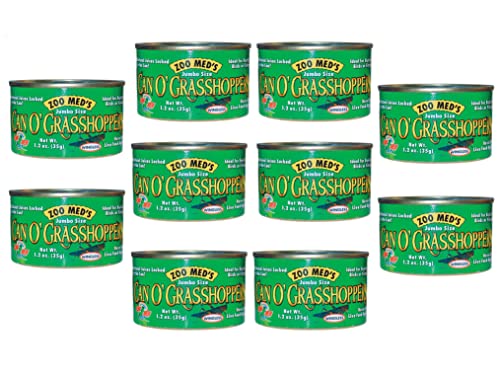
Pros
- Convenient canned format removes the upkeep and odor associated with live feeder insects
- Pre-portioned 1.2-ounce cans simplify individual feedings for appropriate exotic pets
- 10-pack bundle provides practical bulk value for multi-pet insect feeding routines
- Contains whole jumbo grasshoppers suitable for larger insectivorous animals
Cons
- Not formulated, tested, or labeled to meet AAFCO nutritional adequacy standards for dogs
- Lacks canine-specific guaranteed analysis, caloric metrics, and portioning guidelines
- Moist canned insects require prompt feeding or refrigeration after opening to avoid spoilage
Zoo Med Can O' Jumbo Sized Grasshoppers is a specialty canned feed packaged in 1.2-ounce metal tins and sold as a pack of 10. The product features whole jumbo-sized grasshoppers designed to offer the nutritional value of whole insects without the labor of maintaining live bug colonies. While insect-based protein has gained attention in the broader pet care space, the manufacturer explicitly identifies this item as specialized reptile nutrition intended for large monitors, tegus, skinks, turtles, and insectivorous birds.
Regarding nutritional claims and life-stage positioning, the product data contains no canine AAFCO nutritional adequacy statement, guaranteed analysis for dogs, or life-stage guidance. It is not formulated as a complete and balanced canine diet, nor is it marketed as a dog-specific meal topper or mixer. Although grasshoppers naturally provide protein and chitin for insect-eating wildlife, this product lacks the balanced vitamins, minerals, and controlled calcium-to-phosphorus ratios required for daily canine wellness.
The product format emphasizes shelf stability and feeding convenience for pet owners managing exotic animals. Each 1.2-ounce can houses moist, prepared grasshoppers that retain natural texture. Measuring approximately 3 by 1.5 by 1.5 inches per can, the tins take up minimal storage space in a pantry or supply drawer. This canning process seals the insects securely, preventing escape, noise, and odor common with live feeder crickets or grasshoppers.
For daily feeding routines, these individual tins serve as single-use or short-term portions for target animals. Because the manufacturer provides no canine feeding chart, caloric density information, or safe intake thresholds for dogs, it should not be added to a canine daily feeding routine. For designated reptile and bird species, portions should be measured based on the animal's size and dietary guidelines. As with any moist canned product, opened tins must be refrigerated or used quickly to prevent spoilage.
A critical consideration for dog owners is the strict boundary between exotic animal nutrition and canine safety standards. While dog owners may explore novel proteins for sensitive stomachs or training treats, feeding products formulated exclusively for reptiles presents uncertainties regarding sodium levels, processing temperatures, and ingredient purity for mammals. The product data provides no evidence verifying digestibility, safety, or nutritional suitability for puppies, adult dogs, or senior dogs.
For hobbyists caring for large monitors, tegus, skinks, turtles, or birds, the Zoo Med Can O' Jumbo Sized Grasshoppers 10-pack provides a reliable, shelf-stable, and mess-free feeding solution. Conversely, dog owners seeking insect-based nutrition or novel protein toppers should avoid feeds designed for reptiles and instead select commercial dog food or treats specifically formulated and verified for canine health.
According to the manufacturer product specifications, Zoo Med Can O' Jumbo Sized Grasshoppers is formulated exclusively for large monitors, tegus, skinks, turtles, and birds. It is categorized as reptile and exotic pet nutrition rather than a canine diet product.
The product data does not provide AAFCO nutritional adequacy statements, canine life-stage recommendations, or dog feeding directions. Pet owners seeking insect-based nutrition for dogs should consult with a veterinarian and choose treats or diets specifically tested and labeled for canine consumption.
This bundle includes 10 individually sealed 1.2-ounce cans, with each container measuring approximately 3 by 1.5 by 1.5 inches. The total package shipping weight is approximately 1.6 pounds.
The sealed metal cans provide shelf-stable storage at room temperature prior to opening. Once opened, canned moist feeds typically require prompt feeding or refrigeration to prevent spoilage.
Canine Digestion, Insect Ingestion, and Grasshopper Safety
Grasshoppers represent an enticing target for domestic dogs due to their rapid, erratic movements and high hopping trajectory. When a dog consumes a grasshopper, the primary concern is rarely immediate venom, as common grasshopper species do not manufacture systemic toxins. Even so, this benign biological status does not mean ingesting these insects is safe or recommended for your pet. Eating wild bugs introduces mechanical, parasitic, and chemical risks that owners should understand before dismissing the habit as harmless.
The Direct Verdict: Evaluating Wild Grasshopper Ingestion
Dogs can technically swallow grasshoppers without experiencing acute poisoning, but wild grasshoppers should never serve as a regular snack. The canine digestive tract is optimized to break down meat proteins, healthy fats, and digestible carbohydrates rather than tough arthropods. Snapping up garden bugs forces foreign physical materials into the mouth, esophagus, and stomach. Minor ingestion of a single bug may cause little trouble, yet repeated insect hunting creates avoidable health liabilities.
The primary difference between wild foraging and wholesome canine nutrition centers on quality control and digestibility. A wild grasshopper carries unpredictable surface contaminants and internal biological passengers that owners cannot verify beforehand. Even an active insect may harbor microscopic pathogens or chemical residues picked up from local foliage. For these reasons, veterinarians advise discouraging dogs from catching and consuming insects during daily outdoor excursions.
The Problem with Chitin: Exoskeletons and Mechanical Irritation
The physical structure of a grasshopper presents distinct hurdles for canine digestion. Arthropods possess a rigid exterior shell composed primarily of chitin, a tough polysaccharide that resists standard mammalian digestive enzymes. While modest amounts of dietary fiber aid bowel regularity, dense chitin from large insects is notoriously difficult for canine stomach acid to dissolve. Intact insect fragments passing through the digestive tract often trigger gastric inflammation, causing sudden vomiting or loose stools.
The specialized anatomy of grasshopper hind legs introduces mechanical irritation risks. These powerful jumping limbs feature sharp, backward-facing barbs designed for traction and predator deterrence. As a dog swallows the insect, these stiff spines can scrape delicate pharyngeal tissue or scratch the esophageal lining. This physical trauma frequently leads to gagging, exaggerated swallowing, oral discomfort, or coughing episodes that alarm watchful pet owners.
In smaller canine breeds, mechanical irritation can occasionally escalate into partial gastrointestinal blockages. While a large sporting dog might pass hard fragments without noticeable obstruction, toy breeds have much narrower intestinal passages. If a small dog consumes multiple large insects, the accumulated exoskeletons can compact alongside ingested hair and plant matter. Monitoring stool consistency and checking for signs of distress is essential after any witnessed ingestion event.
Parasite Transmission: Stomach Worms and Intermediate Hosts
Parasite transmission represents one of the most significant clinical dangers associated with grasshopper consumption. Grasshoppers, crickets, and beetles frequently serve as intermediate hosts for various parasitic nematodes, most notably Physaloptera species. These internal parasites, commonly known as stomach worms, use insects to complete their biological life cycles. When a dog eats an infected grasshopper, the nematode larvae emerge inside the stomach and anchor to the mucosal wall.
Once attached to the stomach lining, stomach worms feed on tissue fluids and trigger persistent gastritis. Dogs affected by this condition often exhibit chronic intermittent vomiting, reduced appetite, and gradual weight loss. Because parasite eggs are shed irregularly, they do not always appear on standard fecal flotation tests, complicating diagnosis. Treating a confirmed infection requires specific veterinary deworming protocols rather than routine monthly heartworm and flea preventatives.
Grasshoppers can also act as incidental carriers for other internal organisms, including tapeworms and microscopic flukes. When canines regularly forage through moist, overgrown turf, their risk of acquiring internal parasites rises substantially. Routine wellness exams and prompt veterinary intervention become crucial if a dog develops digestive upset after eating insects. Preventing access to bug-heavy grass remains much easier than managing long-term parasitic infections.
Chemical Contamination: Agricultural Sprays and Pesticide Risks
Chemical contamination introduces an acute toxicological threat that extends beyond the insect itself. In residential lawns, parks, and agricultural margins, grasshoppers frequently travel across plants treated with weed killers, fertilizers, and insecticides. Because grasshoppers feed on large volumes of foliage, they absorb synthetic chemicals onto their bodies and within their digestive tracts. When your dog eats a contaminated insect, it ingests those concentrated chemical compounds directly.
Common insecticides formulated with organophosphates, carbamates, or concentrated pyrethroids target the nervous systems of pests. Although a single insect holds a minuscule dose of poison, sensitive dogs or puppies can react poorly to trace amounts. Symptoms of chemical exposure include excessive drooling, watery eyes, muscle tremors, stomach cramping, and sudden lethargy. Severe poisoning is uncommon from a single bug, but cumulative foraging on treated lawns raises the danger.
Dog owners should exercise extra caution during late summer and early autumn when pest control spraying peaks. If you notice sluggish or disoriented grasshoppers in your yard, keep your pets away immediately. Unusually slow movement often indicates an insect has ingested a lethal dose of commercial poison, turning it into a toxic hazard. Contacting your veterinarian or an animal poison hotline is critical if your dog shows neurological or severe gastrointestinal symptoms.
Commercial Feeder Products Versus Wild Insects
Growing interest in alternative animal proteins has led some pet owners to explore commercially prepared insects. Products such as Zoo Med Can O’ Jumbo Sized Grasshoppers 1.2 oz illustrate how insect nutrition is packaged for specialized domestic animals. Zoo Med prepares these feeders by cooking them inside the can, which softens the chitin shell and eliminates live parasites. Available in formats like a pack of 4, a 6-pack of Zoo Med Can O’ Jumbo Size Grasshoppers, or a pack of 10, these products offer clean handling.
While canned options provide a sanitary alternative to wild bugs, they are formulated specifically for reptiles, amphibians, and insect-eating birds. They lack an AAFCO nutritional adequacy statement for dogs, meaning they cannot serve as a complete and balanced canine meal. Offering a cooked grasshopper from a Zoo Med feeder can as an occasional novelty treat differs from letting a dog eat wild bugs, but strict moderation is necessary. Any supplemental snack should never exceed ten percent of your pet’s daily calorie allowance.
Canine digestive systems may still react unpredictably to commercial insect matter if introduced without a slow transition. Although commercial cooking softens the hind leg barbs and neutralizes biological pathogens, unfamiliar proteins can still prompt loose stools. Owners looking for novel protein sources are generally better served by commercial canine diets featuring balanced insect meal, such as black soldier fly larvae. Consulting your veterinarian before offering non-traditional animal proteins ensures dietary balance.
Recognizing Symptoms of Gastrointestinal and Respiratory Distress
Pet owners should recognize early warning signs when an ingested insect causes internal irritation. In many instances, mild symptoms appear within an hour as the stomach struggles to break down the fibrous shell. Common signs include frequent lip licking, loud stomach rumbling, flatulence, and brief episodes of retching. If your dog vomits the insect alongside clear fluid or kibble, the issue usually resolves without medical treatment.
Conversely, progressive or worsening symptoms warrant prompt veterinary examination to rule out complications. Continuous non-productive retching, dark stools, severe lethargy, or marked abdominal guarding suggest that mechanical obstruction or parasitic inflammation has developed. In rare cases where an insect barb punctures the gums, localized swelling or secondary bacterial infections can emerge. Maintaining control on walks with a reliable no-pull harness for strong pullers helps owners steer pets away from insect-dense brush before symptoms arise.
Respiratory symptoms require immediate attention if an insect fragment accidentally enters the airway instead of the digestive tract. If your dog coughs forcefully, wheezes, paws at its muzzle, or displays pale gums after catching an insect, aspiration may have occurred. Foreign body aspiration constitutes a veterinary emergency that requires quick medical evaluation to prevent lung inflammation or airway blockage. Never attempt to dislodge unseen debris deep within your dog’s throat without professional assistance.
Managing Yard Environments and Outdoor Foraging Behavior
Preventing your dog from consuming backyard bugs is far more effective than managing the aftermath of indiscriminate foraging. High prey-drive breeds and curious puppies naturally stalk small creatures that dart across their path. Teaching a reliable leave-it cue gives owners verbal control whenever an insect hops into view. Consistent positive reinforcement training encourages your pet to ignore passing critters and focus on you instead.
Simple environmental adjustments around your property can dramatically reduce insect encounters. Keeping your lawn neatly mowed, trimming ornamental grasses, and clearing damp leaf piles eliminates prime habitat for grasshoppers. When navigating nature trails or overgrown paths, outfitting your pet with a sturdy collar for large dog breeds provides dependable physical guidance away from dense weeds. These routine habits curb scavenging opportunities while preserving safe outdoor exercise.
Homeowners should also reconsider chemical applications on lawns where pets spend unsupervised time. Avoid broad-spectrum insecticide sprays or broadcast granules across primary canine play zones. When professional pest control treatments are required, ensure all applied solutions dry completely before releasing your dog into the yard. Adopting pet-conscious garden practices protects your companion from secondary pesticide ingestion while keeping outdoor spaces enjoyable.
Nutritional Realities: Whole Foods Versus Insect Novelties
Although insect protein represents an expanding frontier in sustainable animal nutrition, dogs do not need to catch garden bugs to thrive. Quality commercial dog foods provide complete and balanced nutrition through carefully measured animal proteins, essential fatty acids, and bioavailable vitamins. Ingesting wild grasshoppers offers negligible nutritional value compared to the mechanical irritation, parasite risks, and chemical hazards involved. Feeding proven commercial diets ensures your dog receives predictable nourishment tailored to its life stage.
When you want to satisfy your dog’s interest in novel textures, choose purpose-made canine chews and treats. Single-ingredient dehydrated meats, tendon chews, and dental treats offer rich flavor without the sharp spines or contaminants of wild insects. For dogs driven by strong foraging instincts, puzzle toys and scent-based games provide satisfying mental enrichment. Redirecting predatory drives into structured play keeps pets engaged without exposing them to outdoor hazards.
If your dog swallows a stray grasshopper, calm observation is the best immediate response. Monitor your pet’s energy, appetite, and bowel movements closely over the following twenty-four to forty-eight hours. Ensure constant access to fresh water and offer a bland diet if mild digestive gurgling occurs. Reaching out to your veterinarian at the first sign of persistent vomiting or discomfort ensures your companion stays safe and healthy.


Write Your Review
No reviews yet. Be the first to share your experience!