


Fresh fruit often tempts pet parents looking for wholesome treats to share with their canine companions during snack time. When evaluating fresh produce options, pet owners frequently ask whether can dogs eat blueberries without upsetting their digestive systems. Blueberries offer natural sweetness and essential nutrients, but determining safe serving sizes and proper preparation methods is critical for maintaining balanced canine nutrition.
While whole fresh fruit can serve as an occasional low-calorie reward, many households also incorporate specialized blueberry-flavored treats or dental chews into daily routines. Active routines that combine wholesome snacks with outdoor exercise, perhaps secured in a car safety harness for small dogs, help support overall canine vitality. Understanding how fruit treats fit into daily caloric allowances ensures dogs enjoy variety without unbalancing their core nutritional profile.
Pros
- Specifically calibrated in size and chew density for small dogs weighing 5 to 15 pounds
- Chewy mechanical texture helps clean down to the gumline during normal gnawing
- Distinctive blueberry recipe provides an appealing alternative to standard mint or poultry dental sticks
- Veterinarian-recommended dental brand formula fortified with vitamins and minerals
Cons
- Strictly intended for dogs within the 5 to 15-pound weight range to prevent swallowing hazards
- Formulated solely as a supplemental treat rather than a complete and balanced meal replacement
- Fast gulpers must be monitored to ensure adequate chewing rather than swallowing large chunks
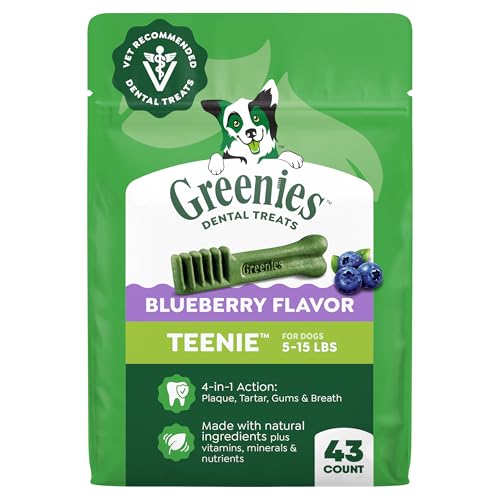
Greenies Teenie Blueberry Flavor Dental Dog Treats are specialized chew treats crafted for toy and small breed dogs weighing between 5 and 15 pounds. Packaged in a 43-count bag weighing 0.75 pounds, these daily dental sticks give owners an accessible way to support canine oral hygiene between professional veterinary checkups. Because smaller dogs have crowded dentition that can accelerate debris accumulation, an everyday chew matched to their jaw size is an advantageous addition to their feeding routine.
As a supplemental chew rather than a complete primary food, this recipe blends natural ingredients with added vitamins, minerals, and essential nutrients. The inclusion of blueberry flavor offers a fruit-forward profile that stands out from typical plain or minty dental sticks. According to manufacturer data on file, using these daily chews consistently supports up to 47% less tartar accumulation and 40% less plaque accumulation within 28 days, addressing four key areas commonly evaluated during veterinary exams: plaque, tartar, gums, and breath.
The physical design of the treat relies on a flexible, chewy consistency that allows small dog teeth to sink into the stick before it breaks apart. This mechanical interaction gently scrapes along tooth surfaces down to the gumline, helping dislodge food remnants and soft buildup. Additionally, the manufacturer notes that the formula works to balance the canine oral microbiome. The Teenie shape ensures that dogs with compact mouths can comfortably manipulate the treat without jaw strain.
For daily feeding, small dog owners should offer one Teenie treat per day to dogs within the 5 to 15-pound range, always ensuring access to clean drinking water. Because all dental chews introduce extra calories to a dog's dietary intake, conscientious caregivers should account for treat calories within the daily food allowance to help preserve a healthy body condition. The 43-count packaging provides approximately six weeks of oral care for a single dog and stores easily in a cool, dry pantry.
While the manufacturer highlights clinically proven benefits for reducing plaque and tartar, dental chews do not replace veterinary cleanings or treat existing periodontal disease. Pet parents should supervise their dogs during treat time to verify that the dog thoroughly chews the stick rather than swallowing large fragments. Furthermore, this specific product is not suitable for dogs under 5 pounds or over 15 pounds, as incorrect sizing may compromise safety or cleaning efficiency.
For households caring for toy or small dogs, Greenies Teenie Blueberry Flavor dental chews offer a convenient combination of mechanical cleaning and appealing taste. The targeted sizing and manufacturer-supported tartar reduction make this 43-count pack a practical purchase for owners looking to reinforce their dog's everyday oral health habits.
Dental health plays a significant role in a canine's overall comfort and health, with smaller breeds frequently requiring dedicated attention due to teeth crowding. Greenies Teenie chews are specifically engineered for dogs between 5 and 15 pounds, offering the correct chew density and dimensions for miniature jaws.
The formula targets four essential oral areas: plaque reduction, tartar prevention, gumline cleaning, and breath freshness. Using treats designed outside your dog's actual weight category can pose choking risks or reduce cleaning effectiveness, making strict adherence to the 5 to 15-pound weight recommendation vital.
Complete Guide to Feeding Blueberries and Blueberry Treats to Dogs
Dogs can safely enjoy fresh and frozen blueberries in moderation as a wholesome, nutrient-rich treat. These small fruits supply beneficial antioxidants, dietary fiber, and essential vitamins without adding unnecessary fats or artificial additives to your dog’s diet. However, pet parents must understand proper preparation methods and safe serving limits to avoid digestive disturbances. Balancing fruit rewards alongside a nutritionally complete commercial diet ensures your canine enjoys natural flavors while remaining in peak physical health.
Nutritional Profile and Natural Health Benefits for Dogs
Blueberries rank among the most nutrient-dense fruits that canines can safely consume as an intermittent treat. They contain substantial levels of natural polyphenols and anthocyanins, which create their rich purple color while providing powerful cellular antioxidant support. These antioxidant compounds help protect canine cells from oxidative damage caused by natural aging, physical exertion, and environmental toxins. Providing antioxidant-rich snacks supports normal cellular function and long-term immune system resilience throughout every stage of a dog’s life.
In addition to cellular antioxidants, blueberries deliver meaningful quantities of essential micronutrients including vitamin C, vitamin K, and manganese. Although healthy dogs produce vitamin C internally within their livers, dietary additions of this water-soluble vitamin can offer supplemental support during times of physical stress or strenuous exercise. Vitamin K works within the body to regulate normal blood clotting mechanics and assists with canine bone density maintenance. Manganese acts as a vital cofactor for metabolic enzymes that process dietary carbohydrates and proteins effectively.
The natural dietary fiber present in fresh blueberries plays a valuable role in maintaining smooth digestive transit and supporting gut health. Soluble and insoluble fibers work together to bulk up stool and nourish beneficial microflora residing within the canine colon. Whole fresh berries consist of roughly eighty-four percent water, providing gentle supplementary hydration for active dogs during outdoor play. This balance of natural hydration, fiber, and micronutrients makes raw blueberries an appealing alternative to calorie-dense commercial biscuits.
Safe Daily Portion Sizes and the Ten Percent Treat Rule
Veterinary nutrition guidelines consistently emphasize that supplemental foods, including fresh fruit snacks, must never exceed ten percent of a dog’s total daily caloric intake. The remaining ninety percent of daily energy must come from a complete and balanced diet formulated to meet established canine nutritional standards. Exceeding this ten percent treat threshold can inadvertently displace essential dietary minerals, proteins, and amino acids found in complete kibble or wet food. Consistent overfeeding of treats also contributes to caloric surplus and gradual canine obesity over time.
For toy and small-breed dogs weighing between five and fifteen pounds, safe daily limits range between two and four individual blueberries. Small dogs possess compact gastrointestinal systems that react quickly to sudden influxes of dietary fiber and natural sugars. Offering a ten-pound dog an entire cup of berries is equivalent to a human eating several pounds of fruit in one sitting. Pet owners must exercise strict portion discipline with small companions to prevent stomach irritation and osmotic bowel looseness.
Medium-sized dogs weighing between twenty and fifty pounds can generally tolerate five to eight fresh blueberries per day without difficulty. Large and giant breeds weighing fifty pounds or more can comfortably consume eight to twelve individual berries as a refreshing daily reward. However, even large dogs should start with only one or two berries if they have never sampled fresh fruit before. Observing your dog’s digestive response over twenty-four hours allows you to confirm personal tolerance before increasing treat quantities.
Fresh, Frozen, and Dried Fruit: Preparation and Safety Considerations
Fresh whole blueberries represent the cleanest and most direct way to share fruit with your four-legged companion. Before serving, pet parents should always place raw berries into a colander and rinse them thoroughly under cold running water. Washing dislodges loose soil, chemical residues, agricultural sprays, and natural dust from the outer berry skins. Inspecting the fruit during the washing process allows you to discard shriveled, bruised, or moldy berries that could cause digestive upset.
Frozen blueberries serve as a wonderful, crunchy snack that many dogs find especially refreshing during hot summer afternoons. The icy texture provides engaging sensory stimulation and helps soothe warm mouths after active outdoor exercise sessions. However, rock-solid frozen berries can pose a minor choking hazard for small dogs or breeds known for inhaling treats without chewing. Slightly thawing frozen berries or crushing them into smaller pieces before feeding eliminates choking risks while keeping the treat pleasantly cold.
Dried blueberries require significant caution and are generally not recommended for routine canine snacking. The dehydration process strips away water content, concentrating natural fructose and total calories into a tiny, dense package. Consequently, it becomes remarkably easy to feed a dog an excess of concentrated fruit sugar without realizing the actual volume consumed. Commercially packaged dried fruits often contain added cane sugar, sulfur dioxide preservatives, or glazing oils that irritate sensitive canine intestines.
Potential Digestive Risks: Sugar Content, Fiber, and Upset Stomachs
While blueberries contain lower sugar levels than bananas, melons, or apples, they still contain natural fructose that demands careful moderation. The canine gastrointestinal tract is primarily built to process protein and fat, meaning sudden loads of simple carbohydrates can overwhelm intestinal enzymes. Undigested fruit sugars travel rapidly into the lower intestine, where fermentative bacteria break them down rapidly. This rapid fermentation frequently generates uncomfortable intestinal gas, mild abdominal cramping, and sudden bouts of loose stools.
A sudden increase in dietary fiber can also accelerate intestinal motility more rapidly than your dog’s digestive system can accommodate. If a dog accidentally consumes a large volume of berries, the high fiber content can trigger osmotic diarrhea. Dog owners should also know that dark purple or blue pigments from berry skins can pass through the digestive tract intact. Observing discolored or dark-tinted stool after berry feeding is usually harmless pigment excretion rather than an internal medical emergency, provided the stool remains formed.
Canines diagnosed with systemic metabolic issues such as diabetes mellitus require strict veterinary supervision regarding any dietary fruit additions. Even unrefined natural sugars can disrupt carefully managed blood glucose curves and interfere with daily insulin therapy regimens. Similarly, dogs on veterinarian-prescribed elimination diets or sensitive-stomach therapeutic regimens should avoid novel fruits until their primary digestive issues resolve completely. Always consult your veterinarian before introducing fresh fruit treats to medically managed pets.
Commercial Human Foods with Blueberries to Avoid
Pet owners must draw a firm line between raw blueberries and human bakery items made with blueberry fillings or flavorings. Blueberry muffins, pies, tarts, and pancakes are loaded with refined wheat flour, granulated white sugar, butter, and shortening. Ingesting fatty, rich human baked goods places intense stress on the canine pancreas and can trigger acute pancreatitis. Pancreatitis is an agonizing and potentially life-threatening inflammatory condition that requires immediate hospitalization and intensive veterinary intervention.
Canned blueberry pie fillings, pancake syrups, and fruit jams are equally hazardous for canine consumption due to extreme sugar concentrations. These manufactured spreads frequently incorporate citric acid, artificial food dyes, and chemical preservatives that can irritate delicate gastric linings. Regular consumption of sugary table foods promotes rapid tooth decay, gum inflammation, and unhealthy weight gain in dogs of all ages. Keeping commercial fruit preserves strictly out of your dog’s reach prevents avoidable dental and metabolic complications.
The most dangerous ingredient lurking in processed human blueberry foods is the artificial sweetener xylitol, often listed as birch bark extract or wood sugar. Xylitol is frequently added to sugar-free blueberry yogurts, low-calorie baked treats, and diabetic fruit spreads. In dogs, xylitol stimulates a rapid and catastrophic surge of insulin from the pancreas, resulting in severe hypoglycemia within minutes. Ingestion can lead to uncontrollable seizures, acute hepatic failure, and death, making it vital to inspect every human food label before sharing.
Evaluating Blueberry-Formulated Canine Chews and Treats
Many pet food manufacturers incorporate real blueberry flavor and fruit powders into specialized treats, especially daily dental chews designed for small dogs. Formulations such as Greenies Teenie Natural Dental Dog Treats leverage this fruit taste while delivering structured oral hygiene support for dogs weighing between 5 and 15 pounds. These natural dental sticks are veterinarian-recommended for everyday use to clean teeth and freshen breath as part of a routine care plan. Combining appealing flavors with functional textures encourages dogs to chew thoroughly and happily.
The chewy, flexible texture of functional dental sticks works mechanically down to the gumline to scrape away accumulating debris as your dog chews. Manufacturer data on file indicates that including Greenies teeth cleaning treats in a daily oral care routine supports 47% less tartar accumulation and 40% less plaque accumulation in 28 days. These chews are clinically proven to maintain canine oral hygiene, helping balance the oral microbiome and supporting the four primary areas veterinarians evaluate: plaque, tartar, gums, and breath. This mechanical cleaning provides targeted hygiene benefits that whole raw berries cannot match.
When selecting commercially packaged blueberry treats, dog owners must always match the product to their pet’s exact weight bracket and chewing style. Offering a teenie-sized dental chew to a medium or large dog creates an immediate choking hazard because larger jaws can swallow small sticks whole. Conversely, giving an oversized chew to a toy breed supplies unnecessary calories and can strain small jaw joints. Pet owners should supervise every chew session from beginning to end to ensure safe consumption habits.
Daily Exercise, Training Rewards, and Treat Integration
Integrating fresh fruit treats and functional chews into your dog’s lifestyle works best alongside regular physical exercise and outdoor activity. Dogs that enjoy daily walks, games of fetch, or structured training burn energy effectively and maintain lean body condition. For safe evening strolls or nighttime park visits, equipping your dog with waterproof light up dog collars helps maintain high visibility in low-light environments while you offer reward treats. Consistent activity paired with measured treat delivery keeps your companion engaged, fit, and mentally stimulated.
Fresh whole blueberries serve as exceptional training rewards during positive reinforcement training sessions with small and medium-sized dogs. Because individual fresh berries are small, soft, and low in calories, dogs can ingest them rapidly without interrupting their focus on obedience cues. This rapid delivery maintains training momentum during heelwork, recall drills, or agility practice without loading your dog with heavy fats. Using wholesome fruit pieces provides high-value motivational value without the digestive heaviness associated with rich commercial training meats.
Clear communication among household members helps prevent accidental overfeeding when using fruit and dental sticks as daily rewards. Placing the daily allowance of fresh berries or dental chews into a designated container each morning prevents multiple family members from offering extra treats. Once the container is empty, your dog receives no additional snacks until the following day. This simple household routine protects your dog from subtle caloric creep while preserving their enthusiastic appetite for complete, balanced meals.
Practical Steps for Introducing Blueberries to Your Dog
Introducing fresh blueberries into your dog’s regular feeding plan is straightforward when you follow sensible canine preparation steps. Start by purchasing fresh, firm berries from your grocery store or local produce market, avoiding packages with squished, leaking, or moldy fruit. Wash the berries thoroughly under cool running tap water in a clean kitchen colander to eliminate surface dust and potential agricultural residues. Pat the fruit dry with a paper towel and slice larger berries in half if you are feeding a puppy or toy-breed dog.
Offer a single fresh berry piece to your dog and observe their chewing behavior closely to make sure they do not swallow it whole. Watch your dog over the next twenty-four hours for any subtle signs of digestive discomfort, including loose stool, excessive flatulence, or mild lethargy. If your pet demonstrates comfortable digestion, you can gradually increase the portion toward the established daily limit for their weight category. Slicing berries in half remains a helpful practice for small dogs under ten pounds to eliminate potential choking hazards.
Fresh blueberries offer valuable antioxidants and enjoyable taste variety, but they remain an optional dietary addition rather than a required nutrient source. If your dog shows indifference to fruit or develops loose stools after eating berries, there is no nutritional need to keep them on the menu. Prioritizing a complete commercial diet, supplemented by appropriate dental sticks and supervised physical exercise, ensures your dog enjoys a vibrant, healthy life across every season.


Write Your Review
No reviews yet. Be the first to share your experience!