


For a dog’s meal, open commercially prepared canned food and serve it according to its label; making shelf-stable canned food at home is a different, higher-risk process. How to make canned dog food can mean preparing a bowl from a can, mixing wet food with kibble, or attempting to preserve a homemade recipe, and those actions have different safety considerations. The label helps determine whether a product is intended as a complete meal or as a topper, and whether it is suitable for your dog’s life stage.
A simple serving routine starts with clean hands and utensils, a suitable portion, and prompt refrigeration of unused food according to package directions. Changes to a dog’s regular diet are best made gradually, since an abrupt switch may cause digestive upset; the supplied product information for one food, for example, gives a gradual transition period and a longer period for sensitive dogs. If you’re considering adding a human food rather than serving a labeled dog-food product, check its safety first with this guide to tuna for dogs.

Pros
- Over 40g of protein per can supports muscle health and active adult dogs
- Savory gravy texture appeals strongly to picky eaters and senior dogs with dental sensitivity
- Dual-flavor variety pack keeps meal rotations exciting for multi-dog homes
- Provides complete and balanced adult nutrition either as a topper or standalone dish
Cons
- Standard canned packaging requires a can opener and reusable storage lids for leftover portions
- Formulated specifically for adult maintenance, making it unsuitable as a primary diet for growing puppies
- Gravy-based canned food can dry quickly on feeding dishes and requires prompt bowl washing
Pedigree High Protein Cuts in Gravy Wet Dog Food is a canned diet designed to provide adult dogs with nutrient-dense meals featuring slow-cooked meat and poultry cuts swimming in savory gravy. This variety pack, containing twelve 13.2-ounce cans with both Beef & Lamb and Chicken & Turkey recipes, is tailored for adult dog owners, multi-dog households, and budget-conscious pet parents seeking a dependable way to enhance their canine companions' daily feeding routines. Whether used to boost the aroma of dry kibble for a finicky eater or served as a standalone dinner, it delivers reliable daily sustenance.
In terms of nutritional performance, each can delivers over 40 grams of protein, offering substantial fuel to help active adult canines maintain lean muscle mass. The slow-cooked recipe is fortified with essential vitamins and minerals crafted to support a healthy immune system and overall vitality. In addition to solid protein support, the savory gravy naturally promotes increased hydration, which can be particularly advantageous for adult dogs that tend to ignore their water bowls after exercising or during dry winter months in indoor apartments.
The soft, tender texture of the meat cuts makes this wet food exceptionally practical for a variety of canine life stages. Senior dogs with worn teeth or sensitive gums often struggle with hard dry kibble, and adding these cuts in gravy provides immediate physical relief and chewing comfort. It also serves as an effective enrichment tool when smeared onto textured lick mats or stuffed inside durable rubber puzzle toys, keeping high-energy or storm-anxious dogs calmly focused and mentally stimulated during quiet crate time.
From a practical standpoint, the canned format provides a long shelf life before opening, making it easy to stock in a pantry for routine feeding or travel needs. Serving the food is straightforward, though pet parents will need a standard can opener and reusable silicone can covers if dividing a single 13.2-ounce can across multiple small meals. Because rich gravies can dry quickly onto stainless steel or ceramic pet dishes, washing bowls promptly or using a dishwasher after mealtime ensures seamless odor control and hygiene in the home.
While this variety pack offers balanced nutrition for adult dogs, it is not formulated for the specific developmental requirements of growing puppies. Dog owners with dogs prone to acute dietary sensitivities should also introduce the rich gravy recipe gradually over several days to avoid digestive upset. For pet parents managing adult canines, picky eaters, or aging dogs needing softer meals on a reasonable budget, this canned variety pack represents a practical, accessible mealtime upgrade.
Maintaining lean muscle tissue is a primary nutritional requirement for active adult dogs, and this formula provides over 40 grams of protein in every 13.2-ounce can. Sourced from slow-cooked meat and poultry selections, the protein content supports sustained energy levels for daily backyard play, leash walks, and outdoor adventures.
The addition of essential vitamins and minerals aids the canine immune system, helping to reinforce natural defenses against common health challenges. Furthermore, the high moisture content of the gravy supports kidney function and urinary tract health by providing vital dietary hydration directly within daily meals.
Senior dogs frequently experience dental wear, gum tenderness, or missing teeth that make chewing hard kibble painful and frustrating. The tender cuts in gravy eliminate the need for heavy chewing, allowing older dogs to enjoy their meals without discomfort or jaw fatigue.
Aging canines also tend to experience a decline in olfactory sensitivity, which often causes reduced appetite. The rich, savory aroma of slow-cooked beef, lamb, chicken, and turkey cuts helps stimulate a senior dog's sense of smell, encouraging consistent food intake and preventing unwanted weight loss.


Pros
- Large 22-ounce can format is convenient and economical for bigger dogs or multiple-dog homes
- Versatile texture works easily as a full meal or mixed into dry kibble as a savory gravy topper
- Recipe features real beef with zero added sugar, high fructose corn syrup, or artificial flavors
- Provides 100% complete and balanced nutrition formulated specifically for adult maintenance
Cons
- Formulated strictly for adult dogs and is not suitable for growing puppies
- Large 22-ounce cans require refrigeration and can covers if feeding smaller dogs over multiple days
- Summary product specifications do not detail exact guaranteed analysis or calorie breakdown
Pedigree Choice Cuts in Gravy Adult Canned Soft Wet Dog Food With Beef is a classic canned recipe packaged in large 22-ounce cans. Formulated specifically for mature dogs, this recipe features tender, bite-sized cuts bathed in a savory beef gravy. It is positioned primarily for adult dog owners seeking an accessible, everyday wet food that can be served straight from the can or integrated into a mixed-feeding routine with dry kibble.
In terms of formula and nutrition, this recipe is labeled as 100% complete and balanced for adult dogs, supplying the essential dietary nutrients needed for maintenance. The recipe includes real beef to provide a familiar, meat-based aroma and taste that appeals to canine palates. Notably, the formula excludes added sugar, high fructose corn syrup, and artificial flavors. While the provided listing details do not publish specific crude protein percentages or calorie figures, the adult complete-and-balanced profile ensures baseline nutritional adequacy for healthy adult dogs.
The product format consists of soft choice cuts with ample gravy, making it particularly useful for dogs that prefer a softer bite or mealtime moisture. The 12-count pack weighs approximately 16.5 pounds, offering substantial volume per purchase. Pedigree notes that the food is made in the USA with ingredients sourced from around the world, combining domestic manufacturing with widely accessible pantry value.
Daily feeding convenience is a distinct benefit of the 22-ounce can size, especially for medium to large breeds where smaller 13-ounce cans are consumed quickly. For owners of smaller dogs, a single can will easily cover several meals, meaning safe refrigeration and an airtight can lid are essential to keep leftovers fresh. When switching an adult dog to this recipe from another canned or dry brand, gradual introduction mixed over a few days helps support standard digestive comfort.
While this recipe fits everyday feeding well, it has realistic boundaries. It is formulated exclusively for adult maintenance and is not suitable for puppies, pregnant females, or nursing mothers. It is also not positioned as a specialized veterinary diet for dogs with diagnosed food allergies or specific gastrointestinal conditions. For general adult dog care on a practical budget, this 12-pack represents a dependable, versatile option for both standalone dinners and flavorful kibble enhancement.
This canned beef recipe offers flexible serving options depending on your feeding routine. It can be served completely on its own as a full, moisture-rich meal that delivers complete adult nutrition without requiring additional supplements.
Alternatively, the cuts and rich gravy function well as a meal topper or mixer. Combining a few spoonfuls with your dog's regular dry kibble can enhance aroma, improve palatability for picky eaters, and add welcome hydration to their daily bowl.
The product comes in a case of twelve 22-ounce metal cans, providing a total package weight of approximately 16.5 pounds. The bulk sizing helps minimize frequent trips to the store, making it particularly practical for multi-dog homes.
Because 22 ounces is a substantial serving size, any unused portion from an opened can should be sealed with a dedicated can lid or transferred to an airtight container and kept refrigerated. Unused refrigerated portions should be consumed promptly to ensure freshness and flavor.
Pros
- Single-serve 3 oz cans prevent food spoilage and eliminate open cans in the refrigerator
- High-moisture gravy base helps boost daily water intake for kidney and urinary support
- Savory aroma and tender real meat chunks reliably tempt finicky and senior dogs
- Crafted with no artificial colors, artificial flavors, or synthetic preservatives
Cons
- 3 oz portion size is impractical as a sole meal source for large breed dogs
- Gravy-heavy recipe may be overly rich for dogs requiring strict low-fat diets
- Pull-tab metal cans generate daily recyclable waste compared to bulk containers
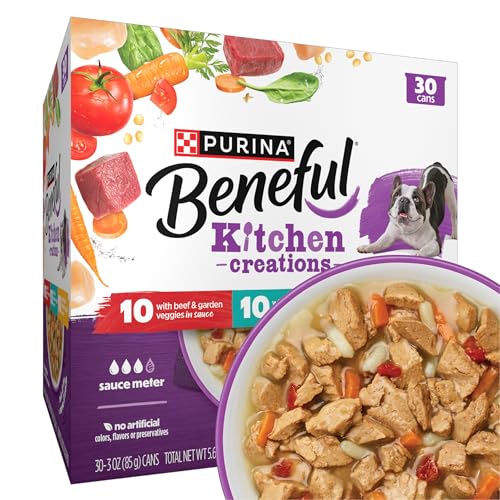
Purina Beneful Kitchen Creations Wet Dog Food Variety Pack provides thirty convenient 3 oz cans crafted with real meat, tender vegetables, wholesome grains, and savory sauce. Designed to deliver 100 percent complete and balanced adult dog nutrition, this variety pack features a balanced rotation of chicken, beef, and lamb recipes. It serves effectively as a standalone meal for petite companions or as a flavor-packed kibble topper for medium and large dogs that need extra motivation at mealtime.
This multi-flavor collection is particularly well-suited for small breed parents, apartment dwellers, and caregivers managing picky eaters. Owners of senior dogs with sensitive gums or missing teeth may find the tender, bite-sized meat morsels much easier to manage than crunchy dry kibble. Additionally, budget-conscious households and multi-dog families can use these single-serving cans to add variety and excitement to standard dry food routines without buying multiple bulky cases of single-flavor cans.
From a daily feeding standpoint, the moisture-rich gravy plays a critical role in supporting healthy hydration, which is essential for urinary tract health and kidney function. When mixed into dry food, the rich sauce coats every piece of kibble, releasing an enticing aroma that encourages reluctant eaters to finish their bowls. The absence of artificial colors, flavors, and preservatives ensures that dogs receive clean nourishment tailored for maintaining lean muscle mass and sustained daily energy.
Packaging practicality is a clear advantage of this 30-count setup. Each 3 oz can features an easy-open pull tab that removes cleanly without requiring a hand-operated can opener, streamlining busy morning and evening feeding routines. The compact can size ensures that entire portions are consumed in one sitting, maintaining food freshness, preventing unwanted refrigerator odors, and eliminating the hassle of dealing with messy plastic can covers.
A realistic consideration is that a 3 oz serving is too small to serve as an exclusive diet for medium and large breed dogs, as an active 60-pound pet would require multiple cans per feeding. For large dogs, these cans function best as supplemental toppers or special rewards rather than complete meal replacements. For small breed owners and pet parents seeking an accessible, shelf-stable topper to make dry kibble irresistible, this Beneful variety pack delivers excellent everyday convenience and reliable nutritional balance.
Small breed dogs have unique metabolic requirements and smaller mouths that make chewing large, dry kibble chunks difficult. The tender morsels in this Beneful Kitchen Creations variety pack are cut into bite-sized pieces that allow toy and miniature breeds to chew and swallow comfortably.
Because each can contains exactly 3 oz of food, pet parents can maintain accurate portion control without worrying about overfeeding or letting half-empty cans sit in the fridge. This makes daily feeding quick, tidy, and perfectly scaled for the calorie needs of petite dogs living in apartments or smaller homes.
Adding canned wet food to a dog's regular routine provides meaningful hydration support, especially for pets that rarely drink enough still water from their bowls. The savory broth delivers essential fluids alongside real meat proteins, supporting healthy kidney function and digestion.
Each recipe is fortified with essential vitamins and minerals to maintain strong adult muscles and a resilient immune system. By avoiding artificial colors, flavors, and preservatives, these formulas provide clean, wholesome nutrition that supports everyday vitality across adult dog life stages.


Serving canned dog food safely and appropriately
To serve canned dog food, use a product labeled for your dog’s life stage, check whether it is a complete meal or a supplemental topper, and follow its feeding and storage directions. Opening a commercial can and portioning its contents is not the same as making and canning a homemade dog-food recipe. Home canning involves food-safety controls that cannot be assumed from ordinary cooking, so don’t improvise a preservation process or treat a homemade recipe as nutritionally complete without appropriate guidance.
The practical decision is usually how to serve a prepared product safely, not how to manufacture a shelf-stable one. A can’s front label and full product directions can clarify intended use, life stage, feeding amounts, and how to handle leftovers. If your goal is a home-prepared diet, discuss the recipe and its nutritional adequacy with a qualified professional who can account for your dog’s needs, rather than relying on a general online formula.
Use this short checklist before the first serving, especially if you are opening a new product or changing how your dog eats.
- Read the package to confirm the product is intended for your dog’s life stage.
- Check whether the label describes a complete meal or a supplemental topper.
- Review feeding directions and portion the food for your dog’s routine.
- Use a clean serving utensil and avoid touching food with unwashed hands.
- Find the package directions for refrigerating and using opened leftovers.
Distinguish a complete meal from a topper
Wet food can be offered as a full meal, mixed with dry food, or used as a topper, but those uses depend on the product’s label. A product described as complete and balanced for a stated life stage is intended to provide a full diet when fed as directed. A topper or supplemental food may add flavor or texture without supplying all nutrients in the amounts needed for a sole diet.
Don’t infer nutritional adequacy from a recipe name, an appealing ingredient list, or the fact that a food contains meat. Look for the product’s adequacy statement and the life stage it covers, then compare those details with your dog’s situation. If the package information is unclear, contact the manufacturer or ask a qualified professional before making the food a regular meal.
Mixing a topper into a complete food also changes the bowl’s total intake, even if the added portion looks small. Account for extras when following a feeding plan, and avoid letting an unmeasured addition become a substantial share of the daily diet. Dogs with medical needs may require a specific feeding plan, so follow the advice already provided for that condition rather than making a substitution on your own.
Choose a portion from the label and your dog’s needs
Feeding directions are a starting point, not an individualized calorie prescription. They may be expressed by body weight or another measure, and the relevant package details vary by recipe and format. Use the directions for the exact food in hand, rather than transferring a portion from another can or assuming that similar-looking foods have equal energy content.
Portions matter because routinely serving more energy than a dog uses can contribute to weight gain, while too little food over time may fail to meet nutritional needs. Weighing or measuring the amount consistently makes it easier to notice how much is being served, especially when several people feed the same dog. If body condition, appetite, or weight changes concern you, seek individualized advice instead of making large adjustments based on a generic chart.
For a mixed meal, count both the canned portion and the dry food rather than treating the wet food as nutritionally invisible. Follow the labels and any feeding plan you already have, and be consistent from meal to meal. A sudden change in portions or food type can make it harder to identify what caused a change in appetite or stool.
Open, portion, and store leftovers with care
Once a can is opened, the food is no longer protected by its unopened packaging. Follow the product’s instructions for refrigeration, covering, and how long to keep the remainder; those details can differ, so don’t assume one rule applies to every recipe. If directions are missing or the can has been stored improperly, contact the manufacturer for guidance instead of guessing.
Use a clean utensil to remove the amount needed, then put the rest away promptly as directed. Avoid leaving wet food sitting out for an extended period, particularly in a warm room, and discard food that appears spoiled or has an unusual odor rather than offering it to the dog. Don’t mix a fresh portion into an old remainder without considering the storage instructions for both.
Keep unopened cans in a suitable storage area and check the package for damage before feeding. A bulging, leaking, badly dented, or otherwise compromised can should not be treated as normal simply because its printed date has not passed. Follow the manufacturer’s handling guidance and discard questionable food safely, keeping it away from pets that might investigate it.
Transition gradually when changing foods
A gradual change is generally more cautious than replacing a familiar diet all at once, particularly when a dog has a sensitive stomach. The supplied product information for one canned food specifically advises allowing seven to ten days for a transition, and ten to fourteen days for sensitive dogs. That is product-specific guidance, not a universal schedule for every food or dog, so check the directions on the product you plan to use.
During a transition, keep track of which food is being served and watch for changes in appetite, stool, or comfort. A change in stool can have more than one possible cause, including a new food, a different portion, or another health issue; it does not by itself identify the cause. If a dog develops persistent or concerning symptoms, stop making further diet changes and contact a qualified professional for advice.
Changing one element at a time can make observations more useful. Switching food, adding several extras, and changing portion size on the same day makes it harder to tell which change matters. If a food is being introduced as a topper, keep the rest of the routine steady while following the package guidance and your dog’s established feeding plan.
These checks can help keep a transition organized without assuming every dog will respond in the same way.
- Read the new food’s transition directions before replacing the current diet.
- Make changes gradually, using the schedule supplied for that product.
- Keep portions measured and avoid adding multiple new foods at once.
- Note appetite and stool changes without treating them as a diagnosis.
- Seek help for persistent symptoms or when a medical diet is involved.
Mix canned food with kibble without losing track of the diet
Some canned foods are labeled for serving alone or mixing with kibble, but the package wording should guide the choice. Mixing can add moisture, flavor, and a different texture to a meal, yet it also changes the total amount served. Measure the components consistently and follow the feeding information for each product rather than assuming that a spoonful of wet food replaces a fixed amount of dry food.
Check whether both foods are appropriate for the dog’s life stage and whether either one is intended only as a supplement. If one component is a topper, it should not quietly displace too much of a complete diet. Keep an eye on the whole meal, including treats and other additions, because feeding decisions are about the overall routine rather than one ingredient in isolation.
Texture can matter to an individual dog, but a preference for gravy, chunks, or a smoother consistency does not establish that a food is nutritionally suitable. Offer a new format in a controlled way and observe whether the dog eats it comfortably. If a dog refuses food repeatedly or has difficulty eating, consider the broader situation and seek advice rather than relying on increasingly elaborate mixtures.
Why homemade canning is not a shortcut
Cooking ingredients at home and sealing them in a jar or can does not establish that the result is safe for room-temperature storage. Preservation depends on a validated process appropriate to the food, container, and conditions, and a general recipe may not provide that assurance. Don’t use an improvised water-bath or pressure-canning method for dog food, and don’t assume that a sealed container is safe because it looks intact.
Food safety and nutritional completeness are separate questions. A recipe could be handled carefully but still fail to provide nutrients in suitable amounts for a complete diet, while a nutritionally considered recipe still needs safe preparation and storage. Home-cooked food that is kept refrigerated or frozen also needs storage and handling rules; those methods should not be confused with making a shelf-stable canned product.
If you want to prepare meals at home, get guidance tailored to the dog and the recipe, including instructions for safe storage. Avoid substituting ingredients casually, because a seemingly minor change can alter the nutritional composition. For a dog with a diagnosed condition or a prescribed diet, do not replace the current plan with homemade food unless the professional responsible for that plan agrees.
Recognize when food changes need extra caution
Dogs with ongoing digestive signs, food sensitivities, or medical conditions may need a more deliberate feeding decision than a routine flavor change. A label claim such as a particular ingredient exclusion does not diagnose an allergy, and a single response to a new food does not confirm one. Keep a clear record of foods and treats if a professional has asked you to track them, and avoid adding unplanned ingredients during that process.
Seek individualized advice before changing a therapeutic diet or using canned food to manage a health problem. General feeding directions cannot account for every medication, condition, or individual need. If advice from a professional conflicts with broad package suggestions, clarify the plan with that professional rather than trying to reconcile the difference by guesswork.
For ordinary feeding, a measured serving, correct life-stage label, and clear storage routine cover the central practical questions. If digestive changes appear after a switch, note the timing and the foods involved, then consult a professional if symptoms persist or seem serious. A related guide to food and stool considerations may help explain why diet changes and cleanup concerns are often discussed together, though stool appearance alone cannot identify a diagnosis.
Make the serving decision from the package, not guesswork
A can is ready to serve only in the sense that its prepared contents can be portioned according to the label; it should not be treated as a homemade preservation project. Confirm the intended life stage and complete-meal status, use the product’s portion and storage directions, and transition gradually when replacing another food. If the goal is a home-prepared or medically tailored diet, get specific guidance before changing the dog’s routine.


Write Your Review
No reviews yet. Be the first to share your experience!