


Many dog owners explore fresh food to provide moisture-rich nutrition, recognizable whole meats, and minimally processed ingredients that support daily vitality. Shifting away from conventional ultra-processed kibble often leads guardians to ask what is the best fresh dog food for their pet’s specific dietary needs and household lifestyle. Choosing an optimal diet requires balancing complete and balanced nutritional adequacy with daily storage realities, since fresh foods range from chilled rolls to shelf-stable pouches. For families managing feeding routines away from home, keeping meals fresh is easier when paired with a travel dog food container guide to preserve freshness on the go.
Finding the ideal fresh formulation also means comparing distinct preparation styles, including gently cooked refrigerated recipes, shelf-stable retort pouches, low-heat rehydratable meals, and freeze-dried raw bites. Each format offers different benefits for mealtime moisture, nutrient preservation, and digestive comfort without requiring hours of home cooking. By examining verified recipes from established names like The Farmer’s Dog, JustFoodForDogs, Freshpet, and Fresh Is Best, dog owners can identify nutritious solutions that fit their budget and routine. Understanding these structural differences ensures your canine companion receives optimal nourishment while avoiding common transition mistakes.


Pros
- Made with wholesome, recognizable ingredients including real beef, peas, and carrots.
- Tender consistency is gentle on senior dog teeth and highly palatable for picky dogs.
- High natural moisture content aids daily hydration and digestion.
- Independently tested for contaminants for added pet food safety.
Cons
- Requires refrigerator space and must be consumed within seven days of opening.
- Manual slicing and dicing takes slightly more preparation time than scooping dry kibble.
- A full six-pound roll may be too large for a single toy breed dog unless portioned and frozen.
Freshpet Healthy & Natural Fresh Beef Roll is a gently steam-cooked, refrigerated dog food formulated to deliver complete and balanced nutrition for adult dogs of all breeds. Packaged in a substantial six-pound roll, this recipe pairs real natural U.S. beef with farm-fresh vegetables you can easily see, such as carrots and peas. By gently cooking the ingredients at low temperatures rather than using high-heat extrusion, this fresh food preserves natural moisture, essential vitamins, and an enticing aroma that standard dry kibble often lacks.
This fresh food roll is especially suited for pet parents managing finicky eaters who routinely turn their noses up at traditional dry kibble. Senior dog caregivers will also appreciate the tender, sliceable texture, which is exceptionally gentle on aging teeth and sensitive gums. Additionally, apartment dog owners and busy pet parents looking for high-quality fresh nutrition without the mess of home cooking will find this roll convenient. It functions reliably either as a complete daily diet or as a high-value meal topper mixed into standard kibble bowls.
In terms of everyday feeding performance, the high moisture content of refrigerated fresh food promotes hydration, which supports kidney health and smooth digestive regularity. The clean recipe excludes meat meals, by-products, and artificial preservatives, making it a gentle option for dogs with sensitive stomachs. Furthermore, the Clean Label Project certification indicates that the formula has undergone independent testing for over one hundred contaminants, providing welcome peace of mind for safety-minded dog owners.
Managing a fresh food roll does require a bit of routine kitchen organization, as it must stay refrigerated before and after opening. Serving is practical: owners simply slice through the plastic casing using the printed measurement marks, dice the food into appropriate bite-sized chunks, and serve it directly into standard dishes or slow feeders. Once opened, the remaining roll should be wrapped securely in foil, placed in a zip-top bag, or kept in an airtight container, and used within seven days to ensure peak freshness.
While refrigerated fresh food provides excellent moisture and flavor, it does demand more daily attention than simply pouring dry food from a bag. Pet parents with single small breed dogs may find it challenging to finish the entire six-pound roll within seven days without freezing individual portions in advance. For households seeking a natural, nutrient-dense diet made with real U.S. beef and garden vegetables, Freshpet provides an accessible fresh alternative that supports healthy digestion, shiny coats, and enthusiastic mealtimes.
Gentle steam cooking helps preserve natural vitamins, minerals, and moisture, promoting healthy hydration levels and digestive efficiency in adult dogs.
Wholesome beef provides high-quality protein to support lean muscle maintenance, while natural antioxidants from whole carrots and peas support everyday immune health.
The omission of meat meals, artificial preservatives, and heavy fillers makes this recipe easy on sensitive stomachs, frequently resulting in improved stool quality and enhanced skin and coat condition.

Pros
- Pantry-friendly shelf stability eliminates the hassle of thawing and frees up freezer space
- Veterinary nutritionist formulated with high-quality human-grade chicken and whole produce
- Provides a great hydration boost and appetite stimulant for picky eaters or aging dogs
- Resealable pouches prevent mess and simplify portion control during busy mealtimes
Cons
- Requires refrigeration and prompt consumption within a few days once opened
- Feeding as a complete daily diet for large or giant breeds can become expensive
- Chicken protein base is not suitable for dogs with diagnosed poultry sensitivities
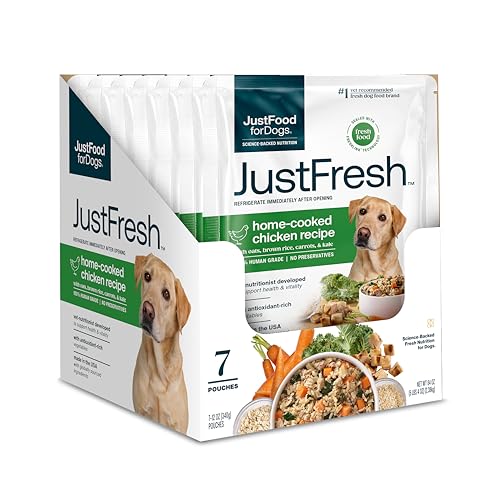
JustFoodForDogs JustFresh Wet Dog Food Chicken Recipe is a human-grade, gently cooked meal and topper designed to offer dogs the nutritional benefits of fresh whole foods with pantry-friendly convenience. Created by veterinary nutritionists, this formula features limited, whole-food ingredients crafted to meet balanced dietary needs across all life stages. Unlike traditional frozen pet meals that require hours of thawing, these pouches utilize specialized packaging that remains shelf-stable for up to two years until opened, making fresh feeding straightforward and accessible.
This fresh food option is particularly well-suited for owners of picky eaters, growing puppies needing digestible protein, and senior dogs struggling with low appetite or dental sensitivity. Apartment dwellers with limited freezer space will appreciate skipping frozen food deliveries, while busy multi-dog households can easily utilize the pouches as a nutrient-dense kibble enhancer. It also serves as an excellent solution for outdoor adventures or travel, where maintaining a frozen raw or fresh diet is impractical.
In terms of daily performance, the recipe offers strong digestive benefits, moisture support, and high palatability. The tender texture and rich chicken aroma can persuade stubborn dogs to finish their bowls, which proves especially helpful for dogs recovering from illness or older pups needing extra hydration. Because the ingredients are human grade and free of artificial preservatives, many pet parents report improvements in stool consistency, energy levels, and coat luster after introducing gently cooked whole food into their dog's routine.
From a convenience and storage standpoint, the design of the 12-ounce pouches helps minimize feeding mess. Each pouch features a resealable closure, allowing you to pour exact portions over dry kibble or serve a full meal before sliding the remainder into the refrigerator. The lightweight packaging also reduces waste compared to heavy steel cans and takes up minimal cupboard space, making pantry organization effortless.
While the formula delivers exceptional nutritional quality, owners should keep a few practical considerations in mind. Using these pouches as a primary, stand-alone food source for large or giant breeds will require multiple packs weekly, which can stretch monthly pet care budgets. Additionally, dogs with identified poultry allergies will need to explore alternative protein lines. For owners seeking an easy way to elevate dry kibble or provide a clean, digestible diet without freezer clutter, this chicken recipe provides a practical and wholesome balance.
Formulated by board-certified veterinary nutritionists, this limited-ingredient chicken recipe focuses on high nutrient bioavailability. Gently cooking human-grade meats and vegetables preserves essential vitamins, amino acids, and natural moisture without relying on artificial preservatives. This approach supports sensitive digestive tracts, promotes lean muscle maintenance, and aids immune resilience.
The elevated moisture content in fresh wet food also plays a vital role in urinary tract health and everyday hydration, making it a valuable addition for dogs that rarely drink enough water from their bowls.
Unopened pouches can be stored in your pantry or cupboard at room temperature for up to two years, keeping your freezer free for human groceries. This makes it an ideal option for travel, camping, or road trips where refrigeration is limited during transit.
Once opened, seal the pouch tightly and store it in the refrigerator, using the remaining food within a few days to preserve natural freshness. When serving as a topper, simply mix a few spoonfuls into your dog's regular dry kibble, adjusting overall calorie intake to prevent unintended weight gain.

Evaluating Fresh Canine Nutrition Formats and Feeding Priorities
The best fresh dog food depends on your pet’s life stage, digestive tolerances, and your household storage capacity rather than a single universal brand. Superior fresh diets share three core traits: verified adherence to AAFCO nutritional standards for complete feeding, recognizable whole-food proteins without mysterious byproducts, and gentle processing methods that preserve essential vitamins. Formulations from established makers like JustFoodForDogs, The Farmer’s Dog, Freshpet, and Fresh Is Best show that fresh nutrition spans refrigerated rolls, shelf-stable wet packs, and rehydratable dry blends. Evaluating how these options fit your daily feeding workflow is the most dependable way to choose the right recipe for your dog.
Distinguishing Fresh Dog Food Formats: Cooked, Dehydrated, and Freeze-Dried
Navigating the fresh dog food market begins with recognizing that fresh describes several distinct manufacturing approaches. Gently cooked fresh foods undergo mild thermal processing, such as low-temperature steaming or retort pouch cooking, to eliminate harmful pathogens while preserving natural moisture and volatile vitamins. In contrast, low-heat dehydrated foods slowly remove moisture without exposing ingredients to standard high-heat kibble extrusion temperatures. Freeze-dried formulations freeze raw whole ingredients and sublimate water under vacuum pressure, leaving a shelf-stable product with intact cellular structure.
Each processing method directly influences the physical texture and moisture profile of your dog’s meal. Cooked wet foods and chilled rolls deliver immediate hydration, which supports urinary tract health and assists dogs prone to low water intake. Rehydratable dried meals arrive dry in a bag but transform into soft meals once mixed with water. Freeze-dried bites offer the concentrated nutrient density of raw meat with minimal handling mess, functioning either as crunchy snacks or rehydrated dinners.
Selecting among these formats involves weighing household convenience against dietary moisture goals. Freshly cooked wet meals require refrigeration once opened, whereas freeze-dried and dehydrated options remain stable in your pantry until serving. High moisture levels often enhance palatability for picky eaters, but dry-stored options reduce shipping weight and simplify travel logistics. Understanding how these formats balance water content and thermal processing helps narrow down which feeding style best serves your dog.
Shelf-Stable Retort Pouches Versus Refrigerated Fresh Rolls
Storage logistics often determine which fresh dog food fits sustainably into a household routine. Products such as JustFoodForDogs JustFresh utilize retort packaging technology called FreshLink, allowing unopened pouches to remain shelf-stable at room temperature for up to two years. This packaging process gently cooks whole ingredients directly inside the sealed pouch, locking in freshness without relying on chemical preservatives. As a result, pet parents can stock fresh turkey or chicken recipes without crowding refrigerator or freezer shelves.
Refrigerated fresh rolls, exemplified by Freshpet Healthy & Natural Dog Food Beef Roll, take a grocery-style approach to daily feeding. These rolls are gently steam-cooked to retain essential nutrients and require continuous refrigeration from production until mealtime. Slicing and dicing a fresh roll offers a straightforward serving experience, allowing owners to customize portions easily for small, medium, or large dogs. However, chilled rolls demand dedicated refrigerator space and must be consumed within a few days once opened.
The choice between retort pouches and chilled rolls often comes down to pantry availability and household schedule. Pet parents with limited refrigerator space frequently prefer shelf-stable pouches because multi-packs can sit in a cabinet until needed. Conversely, owners who enjoy slicing visible chunks of beef and farm vegetables right before feeding often appreciate the routine of chilled rolls. Both methods avoid the high-heat extrusion typical of dry kibble, delivering recognizable whole foods with high natural moisture.
Low-Heat Rehydration and Freeze-Dried Nutrition
Dog owners seeking the nutritional integrity of fresh food without sacrificing pantry shelf space increasingly look to low-heat dehydrated and freeze-dried alternatives. The Farmer’s Dog Instant Fresh Chicken & Grain illustrates this concept by applying proprietary low-heat drying technology to human-grade ingredients. This gentle method protects delicate micronutrients that traditional extrusion often degrades, creating a lightweight format where a two-pound dry pouch yields six pounds of fresh food upon rehydration. Adding warm water releases natural savory aromas that appeal strongly to finicky eaters.
Freeze-dried products, such as Fresh Is Best Chicken Freeze Dried Dog Food, approach pantry-stable feeding through cold sublimation. Crafted in small batches using cage-free chicken, collard greens, and kale, these high-protein chicken bites retain the biological integrity of raw ingredients without chemical additives. Vacuum-sealed packaging with a high-oxygen barrier prevents oxidation and maintains freshness over extended periods. Because the freeze-drying process locks in natural textures and savory aromas, these bites offer intense flavor profiles that dogs find naturally enticing.
Rehydration techniques represent an important detail when serving these concentrated formats. While freeze-dried bites can be fed dry as training rewards or toppers, adding warm water restores natural hydration and aids digestion. Dehydrated meals must be mixed with water according to packaging ratios to ensure your dog receives appropriate fluid intake alongside calorie-dense nutrition. Taking a few minutes to rehydrate dried meals creates a warm dish that closely mimics freshly prepared stew.
Nutritional Adequacy and Deciphering AAFCO Statements
A fundamental benchmark when evaluating fresh dog food is ensuring the recipe provides complete and balanced nutrition rather than acting merely as an occasional treat. Complete and balanced meals are formulated to supply every essential amino acid, fatty acid, vitamin, and mineral required by dogs without requiring supplementary powders. The Association of American Feed Control Officials (AAFCO) establishes nutritional profiles that reputable manufacturers use to confirm biological adequacy. Checking the packaging for an explicit AAFCO statement guarantees the food meets rigorous baseline nutritional standards.
Different fresh dog food brands establish their nutritional adequacy through distinct scientific pathways. JustFoodForDogs emphasizes formulations developed by veterinary nutritionists and stands out as a brand supported by peer-reviewed feeding trials published in scientific journals. Similarly, The Farmer’s Dog relies on on-staff, board-certified veterinary nutritionists to formulate their Instant Fresh recipes to meet AAFCO standards for maintenance. These formal formulation protocols ensure that feeding whole food ingredients does not inadvertently cause micronutrient deficiencies over prolonged periods.
Life-stage designations on packaging also demand careful attention from pet owners. While some recipes, like Freshpet Healthy & Natural Beef Roll, are formulated specifically for adult maintenance, options such as JustFoodForDogs JustFresh and Fresh Is Best are crafted to support all life stages. Feeding an adult maintenance food to a growing puppy can result in improper calcium-to-phosphorus ratios and skeletal issues. Always verify that the product’s nutritional adequacy statement matches the exact life stage of your dog.
Complete Meal Feeding Versus Using Fresh Food as a Topper
Pet parents do not need to feed an exclusively fresh diet to provide meaningful nutritional enhancements to their dogs. While recipes like JustFoodForDogs JustFresh and The Farmer’s Dog Instant Fresh are complete meals, they also serve effectively as meal toppers over conventional kibble. Adding a modest portion of savory wet food or rehydrated fresh bites can stimulate the appetite of finicky eaters while infusing extra moisture into dry diets. This hybrid feeding strategy allows budget-conscious owners to introduce premium whole foods without absorbing the full expense of exclusive fresh feeding.
Caloric management becomes critical whenever you combine fresh toppers with a base kibble diet. Because fresh meats and gently cooked ingredients are highly nutrient-dense, failing to adjust your dog’s standard kibble portions can lead to unintended weight gain. When adding fresh toppers to dry kibble, reduce the primary kibble volume proportionally to maintain a stable daily calorie balance. For owners looking to increase meal volume without adding excessive calories, reviewing a safe feeding guide for green beans provides a practical method for incorporating low-calorie, fiber-rich plant additions.
Consistency in portioning helps sustain healthy digestive balance over time. Using an accurate measuring cup or kitchen scale prevents gradual portion creep that can slowly compromise your dog’s lean body condition. Fresh toppers should ideally make up a consistent percentage of each meal rather than fluctuating wildly from day to day. Maintaining steady nutrient ratios ensures your dog enjoys enhanced flavor and texture without suffering digestive volatility or metabolic imbalances.
Human-Grade Quality, Contaminant Testing, and Ingredient Integrity
The term human-grade has become a prominent quality marker in the fresh dog food landscape, but understanding its legal distinction is essential. For a finished pet food to claim human-grade status legally, every individual ingredient must be fit for human consumption, and the entire manufacturing process must occur within human-food-compliant facilities. Products like JustFoodForDogs JustFresh and The Farmer’s Dog Instant Fresh adhere strictly to these standards, ensuring ingredients are handled with human food safety controls. This standard eliminates low-tier rendering byproducts and unregulated processing steps.
Third-party certifications provide an added layer of verification regarding food purity and safety. Freshpet highlights its Clean Label Project certification, an independent verification that tests foods for over one hundred common environmental contaminants, heavy metals, and pesticide residues. Choosing foods that undergo external contaminant screenings offers reassurance that farm-fresh ingredients are genuinely clean. In an era where pet parents scrutinize ingredient origins, independent laboratory verification helps substantiate manufacturer claims of wholesome sourcing.
Scrutinizing the physical ingredient deck reveals how whole proteins and fiber sources are distributed throughout the recipe. High-quality fresh formulations prioritize named animal proteins, such as natural beef, cage-free chicken, or whole turkey, as their leading ingredients. Fresh Is Best reinforces its protein foundations with antioxidant-rich produce like raw kale and collard greens, delivering dietary fiber alongside bioavailable phytonutrients. Selecting foods free from artificial preservatives, mystery animal meals, and synthetic texturizers guarantees that every calorie contributes functional nutrition.
Stepwise Transition Protocols to Prevent Digestive Upset
Switching a dog from heavily processed kibble to nutrient-dense fresh food requires a gradual and patient adjustment period. A dog’s digestive tract adapts its enzyme production and microflora composition to the specific macronutrient ratios of its regular diet. An abrupt switch to fresh meat and whole vegetables can overwhelm the gastrointestinal system, resulting in loose stools, gas, or mild vomiting. Allocating seven to ten days for a systematic transition allows the gut microbiome to adjust smoothly to unadulterated whole foods.
A standard transition framework begins by blending roughly twenty-five percent fresh food with seventy-five percent of the previous diet for the first three days. If your dog exhibits stable stool quality and steady energy, adjust the ratio to fifty percent fresh food and fifty percent old food from days four through six. Days seven through nine should increase the fresh component to seventy-five percent, with the final transition to one hundred percent fresh food occurring on day ten. Moving through these stages cautiously minimizes intestinal friction and ensures long-term dietary tolerance.
Monitoring digestive responses throughout the transition helps you identify individual sensitivities early. Just as owners must exercise care when exploring new treats, such as reviewing a guide on dogs eating golden berries before introducing unfamiliar produce, fresh meal transitions warrant close observation. If your dog develops softer stools during any transition phase, pause at that ratio for an additional two or three days until digestion normalizes. Consulting your veterinarian is always advisable if digestive disturbances persist beyond minor, temporary stool softening.
Storage Rules, Thawing Protocols, and Food Safety at Home
Because fresh dog foods lack harsh chemical preservatives, adhering to proper food safety protocols is essential for household health. Once opened, shelf-stable pouches like JustFoodForDogs JustFresh and fresh rolls like Freshpet must be refrigerated promptly and consumed within three to five days. Resealable packaging or airtight food-grade storage containers help lock in moisture while preventing cross-contamination with human food on refrigerator shelves. Discarding any uneaten fresh food that has sat at room temperature in a feeding dish for more than an hour helps prevent bacterial proliferation.
Maintaining clean feeding equipment is an equally vital component of daily fresh food management. Stainless steel or ceramic bowls are preferable to plastic dishes, as plastic can develop micro-scratches that harbor lingering bacteria and rancid fats. Washing your dog’s bowl with hot, soapy water after every fresh meal prevents biofilm accumulation and preserves mealtime palatability. Handling fresh raw or gently cooked meals should always conclude with thorough hand washing, mirroring the safety precautions followed when preparing family meals in your kitchen.
Managing travel or outdoor feeding requires thoughtful planning based on the specific fresh format you utilize. While chilled fresh rolls necessitate cooler bags and ice packs during transit, shelf-stable retort pouches and lightweight freeze-dried bites travel seamlessly in a backpack or suitcase. Dehydrated options like The Farmer’s Dog Instant Fresh provide the complete benefits of fresh food without demanding portable refrigeration, requiring only clean water for campsite or hotel room preparation. Selecting a format that aligns with your lifestyle ensures food safety is never compromised while away from home.
Determining the most suitable fresh dog food ultimately balances your dog’s biological requirements with the practical rhythm of your household. Whether you prioritize the shelf-stable convenience of JustFoodForDogs pouches, the easy slicing of Freshpet chilled rolls, or the lightweight rehydration of The Farmer’s Dog and Fresh Is Best, verified AAFCO compliance remains non-negotiable. Feeding whole meats and minimally processed ingredients can transform your dog’s mealtime enthusiasm while delivering dependable nourishment across every life stage. By starting with deliberate transition protocols and observing proper storage standards, you can confidently integrate fresh nutrition into your pet’s daily care routine.


Write Your Review
No reviews yet. Be the first to share your experience!