


A Pomeranian’s homemade meals should be complete and balanced for the dog’s life stage, with a recipe developed for that purpose rather than an improvised mix of household foods. If you’re learning how to make dog food for pomeranian, the key first step is to plan the diet with a qualified veterinary professional before replacing a complete commercial food. Small portions can make measurement errors matter, and a recipe that looks wholesome may still lack essential nutrients. The goal is not simply to cook ingredients, but to provide a reliably balanced daily diet.
Start by identifying your dog’s age, current food, health needs, body condition, and usual appetite, then use those details to discuss an appropriate recipe and feeding amount. A home-cooked meal may be useful in some situations, but the ingredients and proportions need to be specific to the intended diet; there is no universal Pomeranian recipe. Changes should be gradual, and signs such as vomiting, diarrhea, appetite loss, or unusual lethargy warrant prompt attention. For context on evaluating a single ingredient, see our guide to feeding tuna safely.


Pros
- Formulated with reduced phosphorus and sodium to support long-term renal health
- Includes Enhanced Appetite Trigger (E.A.T.) technology to entice dogs with low appetites
- Exceeds AAFCO minimum essential amino acid levels to combat muscle loss
- Features ActivBiome+ Kidney Defense prebiotic complex to support gut microbiome balance
Cons
- Requires authorization and guidance from a licensed veterinarian prior to purchase
- Higher cost per pound compared to standard adult maintenance kibble formulas
- Available in an 8.5-pound bag size that may require frequent reordering for larger breeds
Hill's Prescription Diet k/d Kidney Care with Chicken Dry Dog Food is a specialized therapeutic dry kibble formulated to protect kidney function in dogs. Unlike standard adult maintenance formulas found on typical retail shelves, this recipe is a dedicated veterinary diet developed by Hill's nutritionists and veterinarians. It is specifically positioned for dogs needing dietary kidney support to help manage renal stress and sustain daily quality of life under clinical supervision.
The formula focuses on targeted mineral and nutrient adjustments to address the metabolic demands of kidney health. It incorporates reduced levels of phosphorus and sodium to limit kidney workload and protect vital organ function. In addition, the recipe supplies essential amino acids in amounts higher than the baseline daily minimums established by AAFCO, providing the building blocks necessary to maintain lean muscle mass. The kibble also features ActivBiome+ Kidney Defense, a proprietary blend of prebiotics designed to activate the gut microbiome and provide systemic support for kidney health.
Maintaining adequate caloric intake is a frequent challenge for dogs experiencing kidney complications, which often cause reduced interest in meals. To combat this issue, the formula integrates Enhanced Appetite Trigger (E.A.T.) technology, which is clinically tested to stimulate appetite and encourage food consumption. The chicken-based recipe provides an appealing taste and aroma intended to encourage consistent eating even in finicky dogs or those with diminished appetite.
From a daily routine perspective, the 8.5-pound bag offers a manageable size for portioning and storage. Caregivers should measure daily amounts according to their veterinarian's precise feeding guidance, as caloric needs will vary based on the dog's weight, condition, and overall health status. When starting this diet, a gradual transition period is standard practice unless an attending veterinarian directs an immediate change, and keeping the bag sealed in a dry environment preserves the kibble's freshness.
While this recipe provides focused therapeutic benefits, it has distinct boundaries and usage limitations. It is not an all-purpose dog food and is not suitable for growing puppies, pregnant or nursing dogs, or healthy adult dogs without kidney concerns. Supplementing this food with unapproved treats, chews, or table scraps may disrupt the controlled mineral balance and diminish the intended benefits of the diet. Additionally, specialized veterinary diets represent a higher financial commitment than standard retail dog foods.
For owners collaborating with a veterinarian to support a dog's renal function, Hill's Prescription Diet k/d Kidney Care Chicken Dry Dog Food offers a well-calibrated, research-backed dietary foundation. Its combination of controlled minerals, muscle-supporting amino acids, microbiome-focused prebiotics, and palatability technology makes it a practical option for sustaining consistent nutrition and supporting overall vitality.
Hill's Prescription Diet k/d Kidney Care with Chicken uses precise nutritional balancing to minimize metabolic strain on canine kidneys. By moderating phosphorus and sodium concentrations, the diet reduces the filtering stress placed on renal structures. Delivering essential amino acids beyond standard AAFCO baselines ensures that dogs maintain lean body mass, addressing the risk of muscle wasting often observed in dogs with renal challenges.
The formulation also incorporates ActivBiome+ Kidney Defense, a proprietary prebiotic complex. This ingredient blend is crafted to support the intestinal microbiome, promoting gut flora that contribute to systemic metabolic health and kidney function protection.
Because Hill's Prescription Diet k/d is a therapeutic diet, feeding must be conducted under the direct recommendation and monitoring of a veterinarian. When starting this dry kibble, introducing it gradually over a week allows the dog's digestive system to adapt smoothly, unless your veterinarian recommends an immediate switch.
For dogs displaying low interest in eating, the Enhanced Appetite Trigger (E.A.T.) technology helps entice normal feeding habits. Monitoring daily consumption and weighing portions according to veterinary feeding instructions ensures that the dog meets necessary caloric and nutrient targets without unnecessary feeding stress.
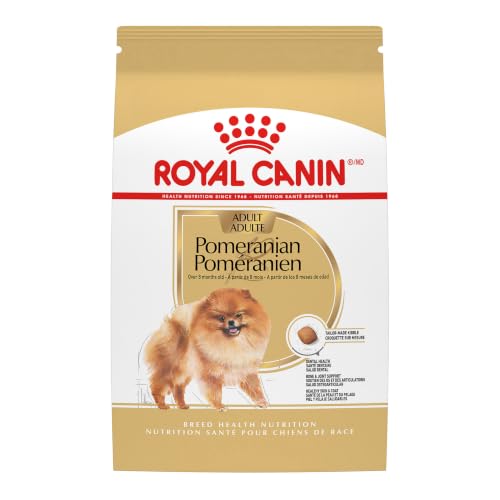
Pros
- Miniature kibble shape is exceptionally easy for tiny mouths to pick up and chew safely
- EPA and DHA promote a noticeably soft, healthy coat and help soothe dry skin
- Nutritional profile is directly formulated to support delicate Pomeranian knees and joints
- Digestible recipe supports smaller, firmer stools for easy apartment cleanup
Cons
- Premium price point per pound relative to generic small breed formulas
- 2.5-pound bag size can run out quickly in multi-dog homes
- Formulated strictly for adult Pomeranians rather than growing puppies
Royal Canin Pomeranian Adult Dry Dog Food is a specialized daily diet engineered exclusively for purebred adult Pomeranians. With their lively dispositions, diminutive frames, and distinctive double coats, Pomeranians have nutritional needs that differ sharply from average small breeds. This focused recipe is ideal for Pomeranian owners, toy breed enthusiasts, and apartment dog parents who want a targeted approach to their companion's daily wellness.
Coat care and orthopedic health are two primary concerns for Pomeranian caregivers, and this food addresses both through targeted nutrient blends. The recipe incorporates EPA and DHA omega-3 fatty acids, which work from within to nourish the skin barrier and preserve the natural texture of a thick, glamorous coat. To assist with the breed's known vulnerability to patellar luxation and joint stress, the formula also features a balanced mineral ratio and specific nutrients aimed at supporting fragile knees and overall bone density.
Dental maintenance can be difficult in toy breeds due to crowded dentition, making kibble mechanics an essential factor. Royal Canin crafted this food with a custom miniature kibble adapted specifically for the tiny jaw and biting pattern of adult Pomeranians. The textured kibble encourages deliberate chewing rather than hasty swallowing, producing a gentle brushing action that helps reduce tartar formation while keeping mealtimes safe and comfortable.
Digestive performance is another practical focus of this formula. Toy breeds living indoors require gentle, easily absorbed ingredients to maintain consistent gastrointestinal health. By pairing highly digestible proteins with a precise mixture of soluble and insoluble fibers, the recipe supports balanced intestinal flora and fosters optimal stool consistency, making daily yard sweeps and pee pad maintenance cleaner and more predictable.
Packaged in a sealed 2.5-pound bag, the food preserves its freshness and appealing aroma throughout feeding, avoiding the stale kibble issues that often arise when buying oversized bags for tiny dogs. While owners of multiple Pomeranians may need to restock more frequently, the breed-specific dental, joint, and coat advantages make this formula a dependable choice for supporting the health and vitality of adult toy dogs.
A Pomeranian's dense double coat requires continuous nutritional support to stay soft, full, and resilient. The added EPA and DHA omega fatty acids nourish the skin underneath, helping to prevent seasonal dryness and keeping the magnificent outer coat looking plush and healthy.
Beyond coat condition, this recipe addresses the structural vulnerabilities common in toy dogs. Calibrated nutrients and minerals work together to support knee integrity, bone strength, and long-term joint function so energetic Pomeranians can stay active and nimble as they mature.
Standard dry dog foods are often too large and dense for toy breeds, causing jaw fatigue or mealtime hesitation. This formula features tiny, custom-shaped kibble designed specifically for the small bite circumference of Pomeranians.
The kibble size allows your dog to grasp each piece easily while encouraging crunching before swallowing. This deliberate chewing action provides mild mechanical scraping against tooth surfaces, supporting everyday oral hygiene between regular brushings.


Pros
- Tailored specifically for Pomeranian knee, joint, and coat requirements
- Highly palatable loaf texture appeals to notoriously picky toy dogs
- Pre-portioned 3-ounce cans reduce waste for tiny appetites
- Rich in EPA and DHA to keep thick double coats soft and lustrous
Cons
- Higher cost per ounce compared to generic small breed wet food
- Small 3-ounce cans are impractical for multi-dog homes with larger dogs
- Soft loaf consistency might not appeal to dogs that strictly prefer chunks or gravy cuts
Royal Canin Pomeranian Adult Wet Dog Food is a breed-specific canned meal designed specifically for adult purebred Pomeranians. With their delicate bone structures and lavish double coats, toy breeds like Pomeranians face distinct nutritional challenges. This loaf in sauce formula delivers complete and balanced daily nutrition while addressing the precise physical demands of small breed life, making it a tailored solution for devoted Pomeranian parents.
Toy breed owners often struggle with picky eating habits and sensitive stomachs. Based on the product specifications, this soft loaf features an enticing aroma and savory sauce designed to tempt finicky toy dogs. The inclusion of highly digestible proteins and a balanced prebiotic fiber blend helps promote smooth digestion and manageable stool cleanup, which is especially valuable for owners managing potty schedules in apartments or indoor settings.
A standout advantage of this recipe centers on targeted physical wellness. Pomeranians are predisposed to knee issues, including luxating patellas, as well as skin sensitivity beneath their dense coats. Royal Canin fortifies this formula with essential minerals for joint and bone support, alongside concentrated EPA and DHA fatty acids. These omega components work from within to nourish the skin barrier and keep fluffy coats vibrant, soft, and easy to maintain during routine brushing sessions.
Daily feeding convenience is built right into the packaging. The 3-ounce cans provide perfectly scaled portions for tiny dogs, helping owners maintain accurate calorie control without wasting uneaten food. The soft loaf blends easily with dry kibble for pet parents who prefer mixed feeding, boosting daily moisture intake to encourage urinary tract hydration. Cans are easy to open, store compactly in kitchen cabinets, and require minimal prep before serving.
While this recipe excels for its target demographic, it is tailored specifically for adult Pomeranians and small toy breeds. Owners with multiple larger dogs will likely find the portion sizes too small and the cost per ounce relatively premium. However, for pet parents seeking targeted joint defense, radiant coat health, and reliable mealtime enthusiasm for their Pomeranian, this dedicated wet formula offers dependable, breed-focused care.
Pomeranians have distinct anatomical needs, from compact jaws to delicate patellas. This loaf in sauce texture is easy for small teeth to chew, reducing mealtime strain while delivering dense nutrition in bite-sized portions.
The pre-measured 3-ounce cans prevent overfeeding, helping owners protect their small dog from unhealthy weight gain that could otherwise place excess strain on tiny joints.
Infused with EPA and DHA omega-3 fatty acids, this wet food actively nourishes the deep undercoat and outer guard hairs of double-coated breeds to reduce flaking and dry skin.
Carefully balanced calcium, phosphorus, and joint-supporting nutrients help reinforce fragile knees and ligaments, supporting energetic play and comfortable daily mobility throughout adulthood.

Pros
- High-protein recipe featuring ethically sourced New Zealand meats, organs, and wild-caught mackerel
- Exceptional serving versatility as a complete meal, meal mixer, or high-value reward
- Gentle air-drying method provides raw alternative benefits with everyday pantry shelf stability
- Tender jerky texture that accommodates both puppy mouths and senior dental needs
Cons
- Higher cost per ounce compared to conventional dry kibble options
- The 2.2-pound package size may be consumed quickly if fed as the sole diet for large-breed dogs
- Rich fish and organ aroma may be noticeable to sensitive pet owners during meal preparation
ZIWI Peak Air-Dried Dog Food in the Mackerel and Lamb recipe is a premium, ready-to-serve raw alternative designed for dogs of all breeds and life stages. Packed in a 2.2-pound (35.2 oz) bag, this formula is built around the concept of whole-prey canine nutrition, making it an attractive choice for dog owners who want the nutritional profile of fresh or raw feeding without the hassle of freezers, defrosting, or messy cleanup. Because the recipe is positioned for all life stages, it suits puppies developing core muscle, active adult companions, and senior dogs requiring dense, easy-to-chew nourishment.
The formula emphasizes animal-derived nutrition, combining wild-caught New Zealand mackerel with free-range, grass-fed and grass-finished lamb, organs, and bone. In addition to primary muscle meat, the inclusion of nutrient-dense superfoods such as cold-washed green tripe, New Zealand green mussels, and organic kelp provides natural sources of joint-supporting nutrients and fatty acids that help maintain a shiny coat and smooth digestion. The recipe is entirely grain-free and avoids common kibble fillers, relying on real meats and added vitamins and minerals to meet nutritional standards as a complete and balanced diet.
In terms of texture and handling, ZIWI Peak uses a gentle twin-stage air-drying process that preserves the nutritional integrity of raw ingredients while rendering the food shelf-stable. The finished product takes the form of bite-sized, jerky-like morsels. Unlike rock-hard extruded kibble, this air-dried food offers a satisfying bite that is small enough for puppy jaws yet pliable enough for older dogs with sensitive teeth. Because it does not require water rehydration like freeze-dried patties often do, it pours directly from the bag with minimal preparation.
Daily feeding with this formula is versatile, serving equally well as a full meal, a flavor-enhancing topper on regular kibble, or a high-value training treat. Because the food is exceptionally nutrient-dense, serving portions are generally smaller by volume compared to standard dry foods. Pet parents transitioning their dogs to ZIWI Peak should introduce it gradually over several days to allow digestive systems to adapt to the rich organ and meat content. The compact bag also makes it practical for travel, road trips, or hiking where carrying bulky cans or refrigerated food is inconvenient.
While this air-dried food offers high-grade ingredients and convenience, dog owners should consider a few practical trade-offs. The rich profile of mackerel, tripe, and lamb produces a distinct natural aroma that dogs typically love, but it might be strong for owners sensitive to seafood odors. Additionally, feeding a 2.2-pound bag as the sole diet for a medium or large dog can be costly, making it more economical for many multi-dog or large-breed households to use it primarily as a meal mixer or topper. For pet owners seeking clean, ethically sourced nutrition with maximum serving flexibility, ZIWI Peak stands out as a reliable, high-end feeding choice.
ZIWI Peak Mackerel and Lamb recipe focuses on whole-prey inclusion, utilizing wild-caught mackerel alongside free-range New Zealand lamb, lamb organs, and ground bone. These primary proteins provide essential amino acids, natural calcium, and bioavailable phosphorus to support overall muscular and skeletal maintenance across all life stages.
The formula is enhanced with functional superfoods, including cold-washed green tripe to aid natural digestive balance, New Zealand green mussels known for supporting joint comfort, and organic kelp for trace minerals. It is crafted without grains, common kibble fillers, added hormones, or growth promotants, making it well suited for owners seeking a limited-ingredient approach to daily feeding.
Thanks to its balanced formulation and concentrated nutrient profile, this air-dried food offers versatile feeding applications. It can be served as a 100 percent complete daily meal according to the manufacturer feeding guidelines, making measuring straightforward for puppies, adults, and seniors alike.
For owners looking to stretch feeding value or tempt picky eaters, the jerky-style pieces work effectively as a dog food topper mixed into standard kibble or wet food. The tender consistency and small piece size also make these morsels ideal as mess-free, high-value training rewards during obedience sessions or outdoor travel.

Plan a balanced homemade diet for a Pomeranian
Make the recipe a nutrition plan first and a cooking task second. A Pomeranian’s small size does not reduce the need for appropriate amounts of protein, fat, essential fatty acids, vitamins, minerals, and energy. A veterinarian can help determine whether home preparation is suitable and identify a qualified veterinary nutritionist to formulate a recipe for your dog’s age and health. Without a complete recipe and its specified supplements, a homemade meal should not replace the dog’s complete food.
Recipes found online often differ in ingredients, quantities, and intended use, so do not combine parts of several recipes or substitute ingredients by guesswork. A recipe designed for a healthy adult may not meet the needs of a growing puppy, and a therapeutic diet requires individualized direction. The right plan also accounts for the dog’s current body condition and activity, not just breed name or a general serving chart. Ask who formulated the recipe, what life stage it covers, and whether every ingredient and supplement amount is specified.
Use this initial checklist to prepare for a recipe discussion:
- Record your dog’s age, current weight, body condition, and usual activity level.
- Write down the current food, treats, supplements, and approximate daily amounts.
- Note known medical conditions, medications, food reactions, and recent appetite changes.
- Ask whether the planned recipe is complete for your dog’s specific life stage.
- Confirm the exact ingredients, gram amounts, cooking directions, and required supplements.
- Request guidance on daily portions and how to adjust them if body condition changes.
Why a complete recipe matters more than a short ingredient list
Meat, rice, and vegetables can make a meal look balanced while leaving important nutritional needs unaddressed. Dogs require a range of nutrients in appropriate proportions, and those needs are not met simply by including several food groups. Calcium and phosphorus balance is one example of a detail that cannot be judged reliably from appearance. A complete recipe accounts for nutrients that ordinary ingredients may not provide in sufficient or appropriate amounts.
Supplement instructions are part of the recipe, not an optional finishing touch. If a formulated plan specifies a particular supplement and quantity, using a different product or omitting it can change the nutrient profile. Human multivitamins and casual additions of bone meal or oils are not safe substitutes for recipe-specific instructions. Confirm product names, amounts, and whether a supplement should be mixed in before or after cooking.
A complete-and-balanced statement on commercial dog food offers a useful contrast: it identifies food intended to provide a full diet for a stated life stage, rather than a topper or treat. Home preparation needs the same attention to nutritional adequacy, even if the ingredients seem fresher or more familiar. Do not assume that a recipe is complete because it comes from a popular website, includes meat, or is described as natural. Ask for the basis of its nutritional adequacy and whether it was formulated for your dog’s intended use.
Choose ingredients only after the recipe is set
Once a complete recipe is available, follow its ingredient list and quantities as written. Choose the specified cuts or forms of ingredients, and avoid swapping chicken for fish, rice for another grain, or one vegetable for another unless the person responsible for the recipe approves the change. Ingredients vary in calories, fat, water, and nutrients, so a seemingly small substitution can alter the overall balance. If an ingredient is unavailable or your dog has reacted to it, pause and request an appropriate revision.
Plain preparation is generally easier to control than food seasoned for people, but follow the recipe rather than improvising. Do not add salt, sauces, seasoning blends, butter, or cooking oil unless the recipe specifically calls for them. Avoid foods known to be unsafe for dogs, including onions, garlic, grapes, raisins, chocolate, and products containing xylitol. If you are uncertain about a particular ingredient, leave it out only after confirming that doing so will not undermine the formulated diet.
Separate a Pomeranian’s daily complete food from extras such as treats, chews, and toppers. Extras can add calories and make it harder to keep the planned diet consistent, while treats cannot stand in for balanced meals. Tell the recipe provider about all regular extras so the feeding plan accounts for the dog’s actual intake. That matters especially when you are monitoring weight or trying to identify a suspected food reaction.
Prepare and portion the food consistently
Use the recipe’s stated cooking method and ingredient weights rather than estimating portions by eye. A kitchen scale can help reproduce specified amounts more consistently than cups, particularly when ingredients are chopped or packed differently. Cook ingredients as directed, then measure supplements according to the recipe; do not assume cooking removes the need for any listed nutrient source. Keep preparation surfaces and utensils clean, and handle raw ingredients with ordinary food-safety care.
Portion the finished batch using the recipe’s daily amount and the feeding schedule advised for your dog. Pomeranians eat relatively small meals, so a modest overpour can represent a meaningful share of the day’s calories. If the recipe gives a daily total, divide that amount consistently rather than adding an untracked extra serving. Keep a written record of the amount fed, including treats and any food used to give medication.

Use these checks each time you prepare or serve a batch:
- Match every ingredient to the current written recipe before mixing the batch.
- Weigh ingredients in the units and state specified by the recipe.
- Follow the listed cooking instructions, without adding seasoning or unapproved substitutions.
- Measure each required supplement carefully and use the specified product.
- Divide the finished food into consistent portions based on the advised daily amount.
- Label stored portions with preparation details and follow the storage guidance provided.
Store cooked portions safely and avoid guesswork
Cooked food is perishable, so use storage and discard instructions suited to the recipe and ingredients. The recipe provider should specify whether portions belong in the refrigerator or freezer and how long they may be kept. Do not leave a serving sitting out for an extended period, and discard food that appears spoiled or has been stored improperly. Clean containers and prompt handling help reduce avoidable contamination risks.
Batch cooking can make daily feeding more manageable, but it does not justify making a larger batch than you can store safely. Divide food into meal-sized portions if that matches the recipe and storage plan, and keep raw ingredients separate from cooked food during preparation. Thaw frozen portions using safe food-handling practices, not by leaving them at room temperature for an extended time. When storage instructions are missing, ask for them instead of guessing.
Keep the recipe and preparation notes with the food. That record helps you repeat a batch accurately and identify changes if an ingredient, supplement, or method was different. If more than one person feeds the dog, make the daily portion and treat allowance clear to everyone. A consistent routine makes it easier to notice changes in appetite, stool, or body condition.
Transition gradually and watch for meaningful changes
Unless a veterinarian advises otherwise, avoid replacing the current diet abruptly. A gradual transition can help you observe how the dog responds, but the timing and mixing plan should reflect the dog’s health and the new recipe. Ask for a specific transition schedule, especially if your Pomeranian has a sensitive stomach or a history of digestive problems. Do not stretch an incomplete homemade mixture into a long transition simply because it is available.
Track appetite, stool consistency, vomiting, and energy while the diet changes. Mild variation can have several possible causes, so a symptom alone does not prove that one ingredient is responsible. Persistent diarrhea, repeated vomiting, refusal to eat, blood in stool, or sudden weakness needs prompt veterinary attention rather than repeated recipe experiments. Stop making unsupervised changes and share the feeding record and recipe details with the professional advising you.
Weight is another useful observation, but it should be interpreted alongside body condition and the agreed feeding plan. Weigh the dog consistently when feasible and report a noticeable trend rather than independently cutting or increasing food. Extra treats, inaccurate portions, and changes in activity can affect the result. A plan may need adjustment, but the appropriate adjustment depends on the individual dog.
Know when commercial food or a mixed approach is more practical
Home cooking requires ongoing attention to formulation, sourcing, preparation, storage, and portion control. If those steps are difficult to sustain, a complete commercial food may offer a more practical way to provide a consistent diet. The label should state the food’s intended life stage and whether it is complete and balanced, rather than a complementary product or topper. A product marketed for a breed does not automatically suit every dog’s medical needs.
A mixed feeding plan can be considered, but additions need to fit the overall calorie and nutrient plan. Some complete wet foods are labeled for feeding alone or mixing with dry food, while toppers and treats may not be nutritionally complete meals. Check the product’s own feeding directions and ask how much can be included without displacing the balanced portion. Do not treat an unrelated product listing or a package’s appealing ingredient description as a substitute for an individualized recipe.
Products in the supplied listings illustrate why label details matter: some are breed-specific adult foods, one is a kidney-care therapeutic diet, and another is described as suitable for all life stages. Those descriptions do not establish that any option is appropriate for a particular Pomeranian, especially one with a diagnosed condition. The therapeutic diet should not be used or replaced without direction from the dog’s veterinarian. Confirm the life-stage statement, nutritional adequacy, and intended use on the exact food before feeding it as the main diet.
Questions to settle before serving a homemade meal
Before the first serving, make sure the recipe is current and written for your dog’s life stage and circumstances. Confirm that it specifies ingredient quantities, preparation, supplements, daily portions, transition guidance, and storage. If the recipe assumes a healthy adult but your dog is a puppy, senior, pregnant, or has a medical condition, do not assume it can be adapted without review. A change in health or medication is a reason to revisit the plan.
Ask how to handle an ingredient shortage, a suspected intolerance, or a change in appetite before those situations arise. Find out which observations should prompt a call and what information to bring, such as the recipe, feeding log, and dates of diet changes. If a food reaction is suspected, avoid removing multiple ingredients at once because that makes the situation harder to assess. Follow professional advice rather than treating a home-cooked diet as an allergy test.
Stool changes can matter during a transition, and our guide to food and stool considerations offers related context. It cannot determine why an individual dog’s stool changed or diagnose a health problem. Record when symptoms began and what the dog ate, then seek tailored advice for persistent or concerning signs. That approach is more useful than changing the recipe repeatedly without a clear plan.
For a Pomeranian, proceed only when you have a complete recipe, precise portions, clear storage directions, and a transition plan suited to the dog. If any of those pieces is missing, keep the current complete diet in place while you obtain guidance rather than improvising a replacement meal.


Write Your Review
No reviews yet. Be the first to share your experience!