


Curious canines treat an open cat pan like a personal snack tray, creating an unsanitary mess and stressing out your feline housemate. Household harmony in multi-pet homes requires a reliable barrier that conceals waste while letting cats enter freely. Adopting the best way to hide litter box pans means swapping exposed plastic trays for multi-functional enclosures that blend into existing furniture. Stylish wooden cabinets, flip-top ottomans, and resin side tables keep waste out of sight while locking in unpleasant odors. Establishing secure room boundaries helps maintain a clean, orderly floor plan without sacrificing precious floor space.
Dog owners frequently balance everyday pet gear with interior aesthetics. Combining your feline setup with practical end tables provides functional utility without advertising a pet toilet to visiting guests. Whether you store these units alongside essential dog supplies or tuck an ottoman into an entryway, interior clearance and door latches make all the difference. Comparing interior measurements, entry tunnel barriers, and durable materials ensures your setup delivers dog-proof litter containment that withstands persistent paws.


Frequently Asked Questions About Hiding Litter Boxes
What design features make a hidden litter enclosure dog-proof?
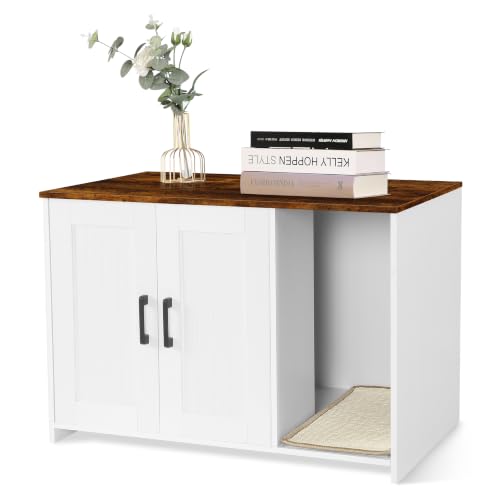
Internal winding corridors, narrow entrances under 8 inches wide, and secure latching doors provide the most reliable dog-proofing. Curved entry routes like those on the Hzuaneri cabinet prevent canine snouts from reaching the pan, while enclosures like the SONGMICS model use narrow 7.9-inch openings that block medium and large dogs. Solid magnetic or mechanical latches also prevent pushy pups from nudging front cabinet doors open.
How do you measure a litter box to fit inside enclosure furniture?
Measure the outer length, width, and height of your litter pan at its widest rim points, then compare them against cabinet interior specifications. Cabinets like the MAHANCRIS provide 29.9 by 18.1 by 24.0 inches of interior space, whereas compact options like the DWANTON offer 18.3 by 17.2 by 17.7 inches. Always leave at least one to two inches of clearance around the pan so cats can turn comfortably and you can lift the tray for daily maintenance.
How does furniture design help contain litter scatter and odors?
Sealed composite panels, elevated floors, and integrated interior scratch mats capture stray granules before cats step onto home flooring. Models featuring built-in sisal carpets or corrugated litter filters trap particles directly inside the exit tunnel. Enclosed designs also contain airborne waste odors inside the cabinet, which you can easily manage with routine scooping and built-in ventilation slots.
Are hidden litter enclosures safe for senior or mobility-impaired cats?
Yes, enclosures with low-clearance thresholds allow senior, arthritic, or short-legged cats to enter without straining. The Fecuria wooden cabinet, for instance, features a 2.5-inch low entry that eliminates strenuous jumping. Checking threshold heights ensures vulnerable felines maintain effortless access while keeping larger, inquisitive dogs excluded.
Can behavioral cues help keep dogs away from cat furniture?
Yes, combining physical furniture barriers with consistent redirect cues prevents persistent dogs from hovering around the enclosure. Understanding how dog whistles work or using clear boundary markers helps teach dogs to respect off-limit zones across the house. While sturdy cabinets physically block access, positive reinforcement solidifies long-term household harmony.
What weight capacity should you expect from multi-functional pet furniture?
Most multi-functional wooden cabinets support between 132 and 220 pounds on their top surface, depending on whether they serve as end tables or seating benches. The Fecuria ottoman bench safely supports up to 220 pounds for guest seating, whereas decorative side tables like the SONGMICS support around 132 pounds. Verifying these limits ensures you can safely place decorative accents, pet supplies, or resting pets on top without structural sagging.





Write Your Review
No reviews yet. Be the first to share your experience!