


Nothing drains the joy out of an afternoon stroll faster than a dog lunging and barking at every passing stranger or neighborhood pet. Tight leashes, sudden snapping, and frantic pulling turn everyday potty breaks into high-stress battles for pet owners. Learning How To Train A Leash Reactive Dog requires shifting from panic reactions to calm, structured leadership that keeps your dog feeling secure. Based on our detailed comparison of training techniques, material safety, and real-world user feedback, structured guidance can help reset your dog’s impulse control. Understanding trigger distances and working on basic social boundaries, like knowing how to introduce dogs on leash, creates a solid groundwork for calmer outings.
Overstimulated pups rarely misbehave out of spite; they act out because fear, frustration, or sensory overload takes over. Clear directional cues, high-value rewards, and steady desensitization help rewire those anxious instincts over time. Handler confidence matters just as much as training gear, since dogs instantly pick up on nervous leash tension. Reading proven manuals by experienced handlers gives you actionable roadmaps to replace lunging with reliable handler focus. With patience and consistent daily practice, you can transform chaotic neighborhood walks into relaxed, bonding adventures.
Pros
- Practical, no-nonsense approach based on real-world law enforcement and search and rescue experience
- Step-by-step guidance from puppy selection to advanced tracking on multiple terrains
- Teaches the critical principle that the dog is in charge once hooked up and given the command
- Includes sample tracking logs, diagrams, and training layouts for hands-on use
Cons
- Primarily focused on tracking for law enforcement and search and rescue, may be more than casual pet owners need
- Limited to scent work and tracking; does not cover other obedience or behavior training
- Reading age listed as 10-18 years, but content is advanced and may be best suited for motivated adult learners
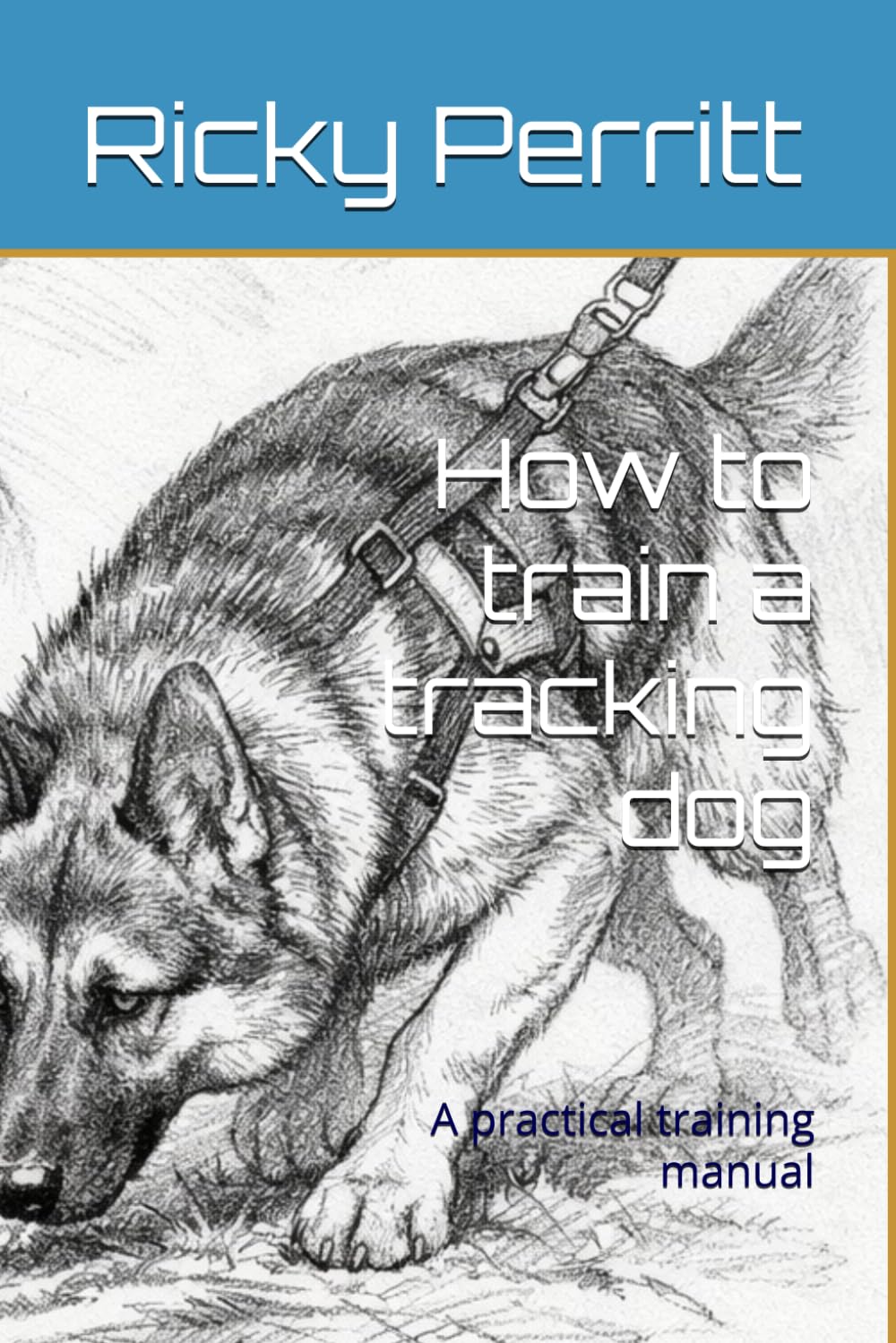
How to Train a Tracking Dog is a practical training manual written by Ricky Perritt, a retired Sheriff's Deputy from Santa Rosa County, Florida, with real-world experience training and working tracking dogs in law enforcement and search and rescue. This book is not a theoretical overview; it is a hands-on guide built from years of daily training, field work, and successful finds involving missing persons, endangered individuals, and fugitives. It is designed for training-focused owners, law enforcement K9 handlers, search and rescue volunteers, and serious hobbyists who want to develop a reliable tracking partner.
The manual walks you step by step through the complete process of building a tracking dog, from selecting a puppy with strong natural scent drive to running complex tracks in real environments. It covers the difference between step tracking and scent tracking, proper use of harnesses, leads, and collars, and how to lay your first tracks and progress safely. The book also addresses training on multiple terrains, turns, kinks, and crossings, as well as how to fix problems using the correct voice and mindset. This makes it a valuable resource for training-focused owners who want to improve their dog's obedience, focus, and scent work abilities.
Build quality is reflected in the book's practical design: 175 pages of clear instruction, sample tracking logs, diagrams, and training layouts. The content is grounded in real-world experience, not theory, which adds credibility for those serious about tracking. The manual emphasizes the core principle that when the dog is hooked up and given the command, the dog is in charge, which helps build trust and partnership between handler and dog.
Ease of use is straightforward: the book is organized to guide you from puppy selection through advanced tracking, with clear steps and troubleshooting advice. It is a working guide meant to be used in the field, not just read once. The sample tracking logs and diagrams make it easy to apply the techniques immediately. However, this is a specialized manual focused solely on tracking and scent work, so it does not cover general obedience, behavior issues, or other training areas.
Realistic limitations include its narrow focus on tracking for law enforcement and search and rescue, which may be more than casual pet owners need. The reading age is listed as 10-18 years, but the content is advanced and best suited for motivated adult learners or dedicated hobbyists. Additionally, the book is independently published, so it may not have the same polish as major publisher releases.
Overall, this manual is a practical, trustworthy resource for anyone serious about training a tracking dog. It offers real-world techniques, emphasizes the importance of documentation and tracking logs, and provides a solid foundation for building a reliable scent work partner. For training-focused owners, law enforcement K9 handlers, and search and rescue volunteers, this book delivers practical value without fluff.

Pros
- Compassionate and positive training methods that reduce both dog and owner stress
- Easy-to-follow steps with real-world examples for everyday situations
- Suitable for dogs of all ages and breeds, focusing on emotional well-being
Cons
- Requires consistent effort and patience from the owner to see lasting results
- May not be sufficient for severe reactivity cases without additional professional help
- Limited user reviews available due to recent publication date
How to Train Reactive Dogs is a practical guide for dog owners struggling with a reactive pup. This book, written by Richard Baker, takes a positive, fear-free approach to stopping bad behavior and helping dogs overcome anxiety. It's not about dominance or punishment; instead, it focuses on understanding the emotional chaos behind the barking, lunging, and meltdowns. For owners who feel exhausted and judged, this resource offers a compassionate path forward.
This book is best suited for owners of reactive dogs, whether they are anxious, fearful, or overwhelmed by everyday triggers like other dogs, strangers, or noises. It's also valuable for training-focused owners who want to build trust and confidence without harsh tools. While it's not breed-specific, the techniques apply to any dog, from small breeds to large ones, and can be adapted for puppies or adult dogs.
Based on the product description, the book covers the real reason dogs react and how to change it using desensitization and counter-conditioning. It also teaches owners to read body language before a dog goes over threshold, which is key to preventing stressful encounters. The step-by-step examples and realistic training schedule make it easy to follow, even for first-time owners. Many dog owners may find the cue-based tools like 'Watch Me' and 'Leave It' particularly helpful for building calm behavior during walks.
The book is a paperback of 129 pages, published independently in April 2025. It's lightweight at 7 ounces and compact at 5 x 0.3 x 8 inches, making it easy to carry or store. While it doesn't include accessories or a warranty, the content is the main draw. The language is straightforward and encouraging, which may help owners feel less alone in their struggles.
One realistic limitation is that training a reactive dog requires consistent effort and patience. This book provides the tools, but individual results will vary depending on the dog's history and the owner's dedication. For severe cases, professional help may still be needed. Additionally, with only two reviews so far, it's a relatively new resource, but the 5.0 rating suggests early readers found it valuable.
Overall, this book is a worthwhile investment for any owner who wants to help their reactive dog feel safe and behave better. It's especially recommended for those seeking positive, humane training methods and for gift buyers looking to support a friend or family member dealing with a challenging dog. If you're ready to trade stressful walks for calm companionship, this guide is a solid starting point.

Pros
- Practical, no-guilt approach that respects the owner's reality
- Step-by-step exercises with clear instructions and real-world application
- Addresses common pitfalls in reactivity training and offers alternative strategies
- Written by an experienced author with a focus on everyday environments
- Includes progress tracking and adjustment tips for when things don't go to plan
Cons
- Relatively new with limited user reviews available
- May not cover every specific reactivity trigger or breed nuance
- Physical book only; no digital or companion materials mentioned
The Reactive Dog Owner's Guide is a training book specifically designed for owners of dogs that bark, lunge, growl, or lose control on leash. Unlike many generic training manuals, this guide focuses on the real-world challenges of leash reactivity and provides a step-by-step approach that doesn't rely on quick fixes or avoidance forever advice.
This book is best suited for training-focused owners who are tired of feeling blamed or judged when their dog reacts. It's also helpful for anxious dog owners who need practical management skills, and for anyone who has tried common advice that only made things worse. The author emphasizes that leash reactivity isn't the owner's fault and offers strategies that work in everyday environments, not just controlled setups.
Based on product specifications and user feedback, the guide covers practical leash-handling, distance management, and timing skills. It explains what leash reactivity actually is and what it isn't, and why some popular training advice can backfire. The 8-week training plan gives a clear structure to get started, but the book also teaches how to track progress and adjust when things don't go as planned.
The build quality of this independently published book is solid: 192 pages of practical content, with dimensions of 7 x 0.44 x 10 inches. It's lightweight at 15.5 ounces, making it easy to carry along on walks or reference at home. The language is clear and conversational, avoiding overly technical jargon.
One realistic limitation is that this is a newer title with only one review so far, so long-term feedback is limited. Additionally, while the strategies are broad, some owners with very specific reactivity triggers may need to adapt the exercises. The book is print-only, so there's no digital version or companion app mentioned.
Overall, this guide is a practical recommendation for any U.S. dog owner dealing with leash reactivity. It offers a compassionate, no-guilt approach that prioritizes real-world progress over perfection. Whether your dog reacts out of fear, frustration, or over-arousal, this book provides the tools to move forward with clarity and confidence.
The Reactive Dog Owner's Guide focuses on step-by-step training exercises that are designed for everyday environments. It emphasizes practical leash-handling, distance management, and timing skills rather than theoretical concepts. The 8-week plan provides a structured starting point, and the book includes guidance on how to track progress and adjust training when things don't go to plan. This approach may help improve leash manners and reduce reactivity over time.
This book is ideal for owners of leash-reactive dogs who are tired of feeling blamed or judged. It's suitable for those who have tried common advice that didn't work and want a more practical, no-guilt approach. It's also helpful for anxious dog owners who need clear strategies to manage walks, and for training-focused owners who want a step-by-step plan. While it's not breed-specific, the strategies apply to dogs of all sizes and temperaments.

Pros
- Practical, city-focused training that addresses real urban challenges like hallways, sidewalks, and dog-to-dog encounters
- Short, manageable daily exercises that work for even the busiest dog owners
- Positive reinforcement methods with no punishment, yelling, or harsh techniques
- Clear step-by-step guidance with trainer's notes and real examples for beginners
- Emergency meltdown recovery protocol helps owners handle public setbacks calmly
Cons
- Book format may not appeal to those who prefer video or interactive training guides
- Specific to urban environments; suburban or rural dog owners may find some content less relevant
- Requires consistent daily commitment for 28 days to see full results
How to Train a City Dog is a specialized training book that tackles one of the most challenging dog ownership scenarios: living in a dense urban environment with a reactive, aggressive, or anxious dog. Unlike generic training guides, this 28-day step-by-step plan is built from the ground up for city life, addressing the unique pressures of tight apartment hallways, crowded sidewalks, and constant encounters with other dogs and people. The author, Bethany Piers, brings a certified CPDT-KA trainer's perspective, focusing entirely on positive, force-free methods that build trust and confidence rather than fear.
This book is best suited for owners who feel trapped by their dog's reactivity, whether it's lunging at other dogs, barking at strangers, or panicking in busy streets. It's especially valuable for apartment dwellers, new dog owners who adopted a rescue with unknown history, and anyone who has tried generic advice that falls apart in real city chaos. The 28-day structure provides a clear path forward, with each day building on the previous one, so owners never feel lost or overwhelmed.
The training system emphasizes practical, short exercises that fit into a busy schedule. Each session is designed to be completed in about 10 minutes, making it realistic for owners who work full-time or have limited free time. Key features include pre-walk reset protocols to prime the dog for calm before leaving home, a trigger mapping system to identify and navigate neighborhood-specific triggers, and an emergency meltdown recovery protocol for those moments when everything goes wrong in public. The book also covers loose leash walking in the city, tight space navigation, and setback recovery, so progress is maintained even after difficult days.
Build quality here refers to the book's physical format: a 190-page paperback with clear chapter organization, trainer's notes, and real-life examples. The writing is accessible and empathetic, avoiding jargon while still providing professional-level guidance. The content is based on proven positive reinforcement techniques, and the CPDT-KA approval adds credibility for owners who want assurance that methods are humane and effective.
One realistic limitation is that this book is laser-focused on urban environments. Owners in suburban or rural settings may find some scenarios less applicable, though the core principles of counter-conditioning and desensitization translate anywhere. Also, like any training program, success depends on consistent daily practice; owners who skip days may not see the full 28-day transformation. The book format means no video demonstrations, but the detailed step-by-step instructions and trainer's notes compensate well for that.
Overall, How to Train a City Dog is a highly practical resource for anyone struggling with a reactive or anxious dog in a city setting. It provides a realistic, compassionate roadmap to calmer walks and a stronger bond. For owners who feel embarrassed or isolated by their dog's behavior, this book offers a lifeline. It's an excellent investment for training-focused owners, apartment dog parents, and gift buyers for dog lovers dealing with urban reactivity challenges.

Pros
- Easy-to-follow, conversational writing style that cuts through training confusion
- Addresses real problems: jumping, barking, chewing, and destructive behavior
- Includes access to online video demonstrations for extra clarity
- Practical advice that works for both new and experienced dog owners
- Great value for the price considering the depth of behavioral guidance
Cons
- Some techniques may require patience and consistency to see results
- Physical book format; no digital code included for e-reader version
- More focused on behavioral issues than advanced trick training or puppy-specific drills
Adam Spivey’s How to Train Your Dog is a refreshingly practical guide for American dog owners who feel overwhelmed by conflicting training advice. As the founder of Southend Dog Training, Spivey brings his straight-talking, no-nonsense style to this book, which promises to help you transform your dog’s behavior while strengthening the bond you share. Whether you’re a first-time puppy parent or an experienced owner dealing with a rescue dog’s quirks, this book offers a clear roadmap to a calmer, more responsive dog.
What sets this training book apart is its focus on understanding why your dog behaves the way it does. Spivey doesn’t just list commands; he explains how dogs think, making it easier to address root causes of issues like leash reactivity, excessive barking, or door dashing. The book covers a wide range of real-life scenarios: walking calmly on leash, recall training, managing excitement around the doorbell or TV, and even tips for households with children or multiple dogs. It also tackles destructive chewing and biting, which is a lifesaver for owners of teething puppies or anxious chewers.
User feedback highlights that the book’s step-by-step guidance is immediately actionable. Many readers report seeing improvements in their dogs’ behavior after just a single read-through. The inclusion of video links via QR codes or short URLs is a huge bonus for visual learners who want to watch techniques in action before trying them with their own pup. Each chapter ends with a helpful recap, reinforcing the key points so you can easily revisit them later. The author even responds to reader messages, showing a genuine commitment to helping owners succeed.
Build quality-wise, the paperback is lightweight and a comfortable size for reading at home or tossing in a bag for reference on walks. The writing is clear, friendly, and free of jargon, making it accessible to all pet parents. While the book doesn’t claim to be a substitute for professional one-on-one training, it provides a solid foundation for most common behavioral challenges. Some advanced training enthusiasts might want more detail on off-leash work or trick training, but for everyday obedience and harmony, this is a standout resource.
Maintenance is zero: just read and apply. No cleaning, no setup. The main “cost” is your time and consistency. Realistic limitations? If your dog has severe aggression or requires a behaviorist, this book may need to be supplemented with professional help. But for the vast majority of owners dealing with typical puppy and adult dog issues, this guide offers a reliable, compassionate path forward. It’s also a thoughtful gift for new dog owners or anyone frustrated with their dog’s behavior.
In short, How to Train Your Dog lives up to its promise. It’s a worthwhile investment for training-focused owners, rescue dog parents, and anyone who wants a happier, better-behaved canine companion without the guesswork. Combined with Spivey’s online content, this book gives you a toolkit for a stronger, more understanding relationship with your dog.

Pros
- Clear, step-by-step guidance tailored to everyday walking challenges like pulling and lagging
- Lightweight and compact paperback format is easy to reference during training sessions
- Actionable advice suitable for both energetic puppies and newly adopted rescue dogs
- Affordable learning tool compared to costly in-person obedience classes
Cons
- Text-based format requires pet parents to self-apply techniques without real-time visual coaching
- Paperback binding lacks waterproof protection for outdoor training in damp weather
- May require supplementary tools or professional hands-on help for severe leash reactivity
This instructional manual serves as a practical, step-by-step guidebook focused entirely on teaching dogs proper leash manners. Walking on a leash is not an innate canine skill, and many owners quickly find themselves battling excessive pulling, frantic zig-zagging, or vocal reactivity whenever a squirrel or neighbor passes by. The guide breaks down the core mechanics of loose-leash walking into manageable training stages, helping handlers foster clear communication with their pets on the sidewalk.
The guide is especially valuable for new puppy owners laying foundational walking habits, as well as rescue dog adopters working with adult dogs who never received formal leash training. Apartment dwellers who rely heavily on daily walks for exercise and bathroom breaks will find the focus on polite sidewalk behavior immediately relevant. Budget-conscious owners who want structured guidance before investing in private obedience trainers can also benefit from the straightforward, home-friendly methodology.
In everyday practice, successful leash training reduces physical strain on the owner's shoulders and prevents choking or tracheal irritation for the dog. By explaining why dogs pull and how environmental triggers cause excitement, the material helps handlers recognize overstimulation before walks spiral out of control. Pet parents can expect actionable suggestions on handling distractions, reinforcing loose leash positioning, and using rewards effectively to keep a dog focused during neighborhood strolls.
Formatted as a traditional paperback measuring 6 by 9 inches and weighing less than six ounces, this volume is lightweight and easy to hold with one hand. The compact dimensions make it simple to slip into a tote, glove box, or training pouch when heading out to a local park or dog-friendly shopping plaza. While the physical cover is standard paper without water-resistant lamination, the clean layout allows handlers to quickly highlight key exercises or bookmark specific trouble spots for fast review.
As with any written obedience resource, the primary limitation is that results depend entirely on handler consistency, patience, and repetition across various distracting environments. Highly reactive dogs showing severe fear or aggression toward other animals may require the personalized intervention of a certified professional trainer. For everyday pullers, energetic adolescents, and new puppies, this handbook offers an accessible, practical foundation for transforming stressful daily strolls into calm, cooperative adventures.
Clear walking techniques outlined in the book help eliminate common bad habits such as forging ahead, dragging behind, or abruptly crossing in front of handlers. Consistency is key, and the step-by-step progression gives owners actionable milestones to track week by week.
Integrating positive reward mechanics ensures training builds trust rather than anxiety. Dogs learn that staying near the handler's side yields high-value reinforcement, resulting in naturally reliable walking manners across varying distractions.
Helpful Answers for Calmer Leash Walks
Can positive reinforcement training books help resolve severe leash reactivity?
Yes, structured training guides written by experienced handlers provide systematic desensitization plans that retrain emotional triggers. Most reactive dogs respond best to counter-conditioning, where positive markers and treats replace panic barking. Following a step-by-step written plan helps owners identify subtle stress signals before explosive reactions occur.
What equipment works best alongside a training plan for a leash reactive dog?
A front-clip harness or a dual-clip no-pull harness gives you the safest physical control while redirecting forward momentum. Using a dedicated no-jump dog harness helps prevent sudden lunging without placing choking pressure on your dog’s sensitive trachea. Pair this with a sturdy six-foot nylon lead to maintain a secure grip without accidental tangling.
How far should you stay from triggers when starting reactivity training?
You should remain outside your dog’s reaction threshold, which is the distance where your pup can observe another dog without barking or stiffening. For many dogs, this distance starts between thirty and fifty feet. Gradually closing that gap over weeks of positive reinforcement builds lasting focus and self-control.
Are tracking and working dog manuals helpful for pet reactivity?
Yes, working dog manuals offer exceptional insight into canine drive, mental stimulation, and handler focus. Engaging your dog’s natural scent drive channels frantic energy into structured work, which drastically lowers ambient anxiety on neighborhood walks. Books that teach tracking fundamentals build reliable attention cues that carry over into daily strolls.
How long does it typically take to see progress with how to train a leash reactive dog?
Noticeable improvements often appear within two to four weeks of daily, consistent micro-sessions. While full rehabilitation takes ongoing patience, establishing a predictable routine and managing walk environments reduces lunging frequency quickly. Keeping training sessions short and upbeat prevents mental burnout for both you and your dog.





Write Your Review
No reviews yet. Be the first to share your experience!